When a landlord demanded an illegal fee, she said no.
When a volunteer spoke over a resident, she said no.
When I tried to work through a fever, she stood in my doorway and said, “No.”
I laughed at her.
“You are becoming difficult.”
“I am becoming honest.”
“That can be difficult.”
“Yes.”
The house where Daniel had tried to take everything became the foundation’s main office. The guesthouse became a small apartment for women waiting to move into permanent housing.
I kept the dining room exactly as it had been.
The lace tablecloth.
Robert’s silver.
The four chairs.
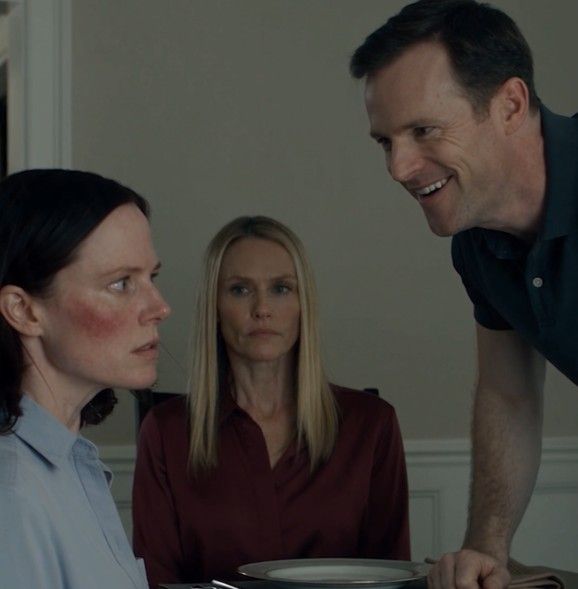
We used the room for meetings. On some evenings, there were six people around the table. On others, twelve. The fourth chair was never reserved anymore.
Anyone could sit there.
The meaning had changed.
It no longer belonged to the person who told the truth at a cost.
It belonged to the person who needed somewhere safe to begin telling it.
One evening, nearly three years after Daniel’s arrest, Marissa came to the house carrying an envelope.
She placed it on the table.
My heart tightened.
“What is that?”
“A letter from the prison.”
“Do you want me to read it?”
“No.”
She sat down.
“It is not from Daniel.”
I waited.
“It is from Robert’s old attorney. He found something in the firm’s archived files.”
She pushed the envelope toward me.
