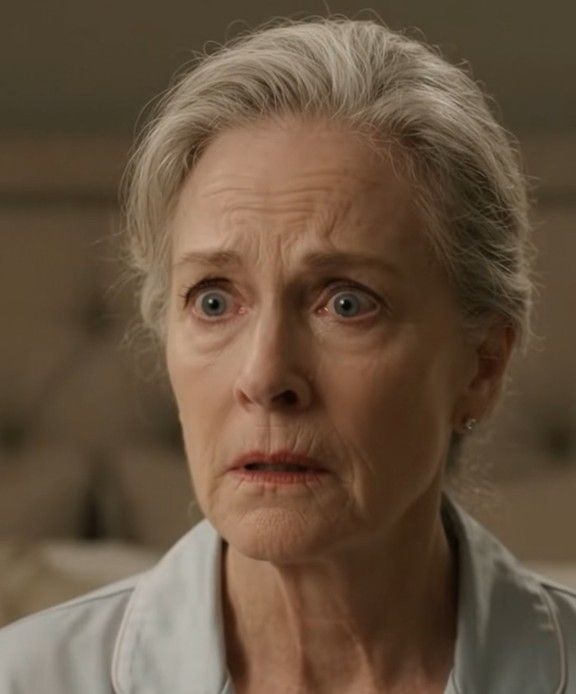
I looked at him. “Do you understand why that matters?”
“Yes. I wanted the comforts of being the owner without the responsibility or the truth.”
“Then what will you do differently?”
He described their budget, the lease, and his plan to rebuild savings. But the part that mattered most came last. “If someone tells me you said something, I’ll ask you. And if Claire and I disagree with you, we’ll speak to you respectfully. We won’t decide you’re inconvenient.”
I did not announce that everything was forgiven. I told him I would watch how he lived. Trust had been damaged by small daily choices long before the deed appeared; it would be rebuilt in the same way.
Ethan adjusted more easily than the adults feared. He missed the giant staircase and the indoor pool, but he loved having a little garden behind the townhouse where he could plant beans. One afternoon he asked whether I would take him to the estate to see the old oak tree. Claire looked at me uncertainly. I said yes, and we drove there together.
Ethan ran ahead along the path, then stopped to inspect a patch of moss. The estate looked enormous from the garden, almost absurdly large for one woman. For a moment I wondered whether all the trouble had come from holding too tightly to it. Then I remembered being told I had to leave before sunrise. Ownership was not the same thing as selfishness.
I was responsible for choosing what the place would become. No one else had a right to make that choice for me.
I met with Rebecca about a long-term plan. She suggested options for keeping the grounds protected while making some of the rooms useful. We reviewed finances carefully. I chose to convert the east guest wing, separate from my private rooms, into a small residence for visiting pediatric specialists and families traveling for treatment at a nearby hospital. It was funded by a charitable organization I helped establish, with professionals running its operations. I did not give away my home. I gave a defined part of it a purpose I had freely chosen.
Rosa became the residence coordinator. She had spent years managing the mansion and knew exactly how to make guests comfortable without making them feel indebted. When I asked whether she wanted the role, she smiled and said she had been waiting for me to give her a job that involved more conversation and fewer imported flower arrangements.
The first family arrived in autumn. Their little girl, Maya, needed several weeks of treatment. Her father stood in the entrance holding a duffel bag and looking overwhelmed. Rosa showed them the rooms and explained that nobody would be surprised by unexpected charges. They could sleep, eat, and return to the hospital without worrying about hotel bills.
Watching them settle in, I felt the strange, deep satisfaction of generosity given without coercion. I had spent millions trying to provide stability for my son. Now a few carefully organized rooms provided respite to people who had asked honestly for help.
One evening Ethan visited while Maya was playing a board game in the sunroom. He joined her and spent an hour teaching her the rules of a game he’d invented involving dinosaurs and planets. When he came to find me, he asked why the little girl was staying at Grandma’s house.
“Because her family needs somewhere peaceful while she gets better.”
“Like when Daddy and Mommy needed somewhere?”
“Yes. But everyone understands the rules this time.”
He considered that. “That’s good.”
On his seventh birthday, Daniel and Claire hosted a small picnic at a public park. There were homemade sandwiches, a cake Claire had baked, and a banner Ethan had drawn himself. Lorraine was not there; her contact with the family remained limited and supervised by the adults in light of the court case. I hoped someday she would take responsibility in a way that made a healthier relationship possible, but I didn’t ask Ethan to carry that hope.
After the picnic, he handed me a folded page. It was a drawing of the Greenwich mansion with many people inside. He had carefully colored the roof green and added tiny hearts in the windows. A little figure with silver hair stood near the front door.
“That’s you,” he said.
“Who are all the others?”
“People who need a house for a while. But you’re the one with the key.”
I stared at the drawing. “How did you know we were making rooms for people?”
“Dad told me.” He pointed to the largest heart. “I made that one because you let people feel safe.”
I carried the picture home and framed it beside the property deed, though the two documents meant very different things. The deed said what I owned. The drawing reminded me why keeping the choice was important.
The next spring Rosa organized a small gathering for the families who had stayed in the east wing. Maya returned with a ribbon in her hair and news that her treatment was going well. Ethan showed her his newest dinosaur game. Daniel repaired a loose garden gate without expecting anyone to praise him. Claire helped carry dishes and asked where I wanted them, then waited for the answer.
At sunset, after the last guest had left, I climbed the curved staircase to my bedroom. It was the same doorway where Daniel had stood at three in the morning, telling me to disappear. I touched the frame, remembering the humiliation, then looked down at the warm lights glowing from the east wing.
Ethan’s paper crown from his sixth birthday sat on my dresser, carefully flattened inside a glass frame. I had kept it because in the middle of fear, a child had offered me a place beside him without conditions. I put it next to his drawing and opened the windows to the evening air.
Some homes feel secure because of gates and deeds. Mine had those things. But its peace had returned only when the people inside learned that love couldn’t be transferred with a false signature, and that being welcomed was a gift worth respecting. I turned off the lamp and listened to the soft sounds of guests settling in downstairs, safe beneath a roof that finally belonged to its true purpose.
