One afternoon, she brought a box from the old house. The buyer had found it in a basement cabinet after closing and forwarded it to her. Inside were school drawings, a stack of utility bills, and a photograph from the day we signed for the home. I had written the down-payment check. Leah stood between Henry and me, smiling with a set of keys in her hand. On the back, in my handwriting, were the words: “A place to begin.”
She held the photograph for a long time. “I thought that house was the proof I had made it,” she said.
“It was a place you lived. It didn’t measure your worth.”
“I know.” She set the photo aside. “I think I believed losing it meant I had failed you.”
“You made a mistake. That isn’t the same as being a failure.”
She took a breath and nodded. “I want to be the person who checks the paperwork now.”
I was proud of her, but I did not turn the moment into a speech. We made coffee and sat at the kitchen table, where the flag by the window moved gently in the warm air. She told me she had started saving a little each month, not for a grand house, but for a deposit on an apartment of her own when the lease ended. It was modest and practical. It was hers.
The final resolution came through the court months later. The frozen funds were divided between legal costs, creditor claims, and a partial recovery for Leah. The restitution order required Henry to repay a set amount over several years. The money would not restore the house or erase the humiliation. But it put a measurable consequence beside the promises he had made. Leah did not wait for every payment to build a life.
At the hearing, she sat straight-backed beside her attorney. Henry sat across the room, older than he had looked on my porch. When the judge asked whether she understood the agreement and its limits, Leah answered clearly. She did not look at me before speaking. That was the detail I remember most. Her voice belonged to her.
Afterward, we walked to the courthouse steps. The afternoon was bright and cold. She asked whether I had ever regretted turning them away that night.
“I regretted that you were hurting,” I said. “I didn’t regret refusing to let the same crisis move into my home and grow.”
She nodded. Then she hugged me, and this time neither of us was asking the other to carry the whole weight.
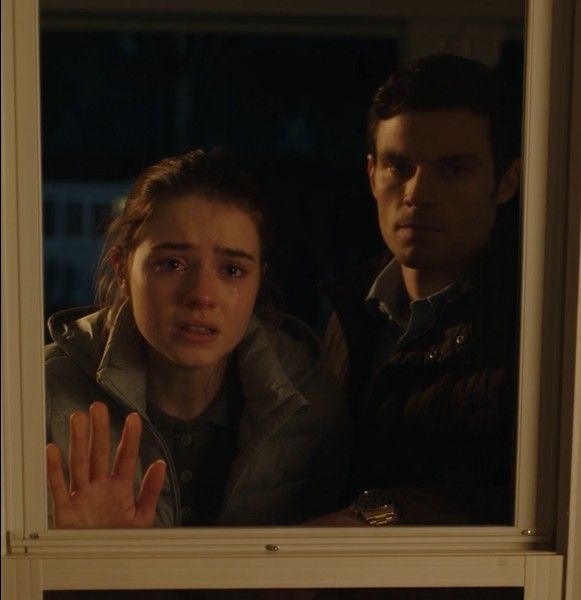
A year after the porch light had caught her frightened face, Leah invited me to her apartment for dinner. It was a small place above a bakery, with two rooms and a view of the school playground. On the wall hung the old photograph from the house. Beneath it, she had placed the note I had written on the back: “A place to begin.”
She had added one line in her own handwriting: “And the courage to begin again.”
We ate pasta at a table she had bought secondhand. She had read the lease herself, questioned a fee, and kept copies of every page. She made a joke about becoming the family’s most irritating person at any business meeting. I laughed. The money was not back, the house was not ours, and the years with Henry could not be rewritten. Yet the room felt safe because no one had to pretend.
When I left, Leah walked me to the stairs and said, “Thank you for not opening the door that night.”
I understood what she meant. The closed door had forced the truth into the light. But I also understood that she had opened another door herself, one document at a time, until she could stand on her own side of it.
The flag in my front window still turns when the heat comes on. The guest room remains ready for family, but it is no longer an unspoken promise that I will absorb whatever someone else brings to my threshold. The room is for visits, rest, and honest conversation.
Leah now calls every Sunday. Sometimes we talk about the case. More often we talk about her daughter’s school, a recipe, or the basil plant she keeps alive in the kitchen window. The first time she called after moving into her apartment, she said she had found a little flag at a neighborhood fair and put it by her own front window.
I smiled at the thought of it. A house had been lost, a business had been exposed, and a family had been forced to learn the difference between rescue and support. The unexpected truth was not hidden in Robert’s folder. It was in the ordinary life Leah rebuilt after the folder was opened: her own keys, her own signature, her own voice.
When she said goodnight, I stood for a moment beneath my porch light. The night was still. My door was locked because I had chosen to lock it, and my daughter was safe in a home she had chosen for herself.
