That was not quite the truth. The letter had said, “Read this when you know what you want, not when you’re afraid of what they expect.” I had stopped there because it felt too close to a warning.
I returned the envelope to the table. “I’m not withholding money from you. I’m not announcing a sale. I’m not changing a will tonight. I am telling you that the way we’ve been living as a family has hurt me, and I’m not going to keep buying closeness.”
Marcus looked up. “You think we only call for money?”
“I don’t know what you think. I know what you do.”
“I’ve sent pictures,” he said.
“You have. Pictures are nice. I miss hearing your voice.”
He nodded, unable to find a quick defense.
Daniel said he had not known I felt abandoned. I asked him how he could know if he never asked. He opened his mouth, then shut it. The room quieted. The refrigerator hummed from the kitchen, the same sound that had kept me company all afternoon.
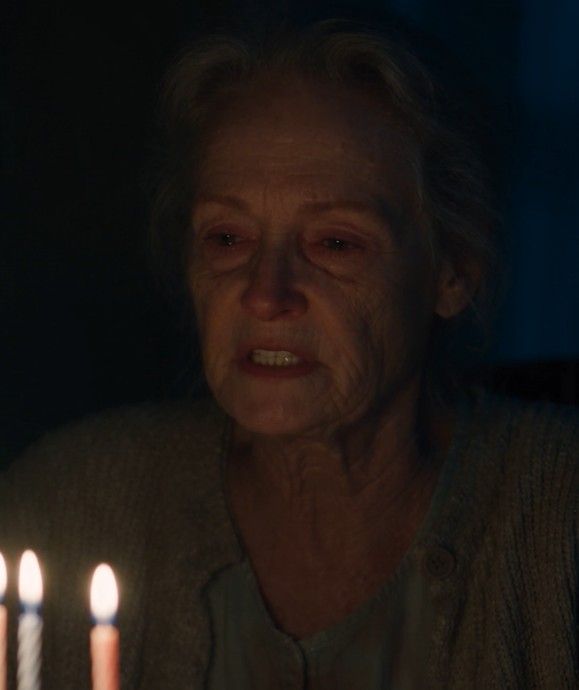
I cut the cake, giving each of us a small slice. The candles had melted, so there was nothing to relight. Patrice took a bite and began to cry again. This time she did not ask me to tell her it was all right.
We spoke until after midnight. They told me what had been happening in their lives: Daniel was working longer hours and afraid his house payment had become too much; Marcus and Sandra were helping her mother recover after surgery; Patrice had been juggling two jobs and the boys’ school schedules. These were real pressures. I listened. Then I told them those pressures did not make me responsible for every gap, and they did not excuse making me an afterthought.
Daniel asked whether the envelope included a plan for the house. I said I did not know. He wanted me to read it soon. I told him I would read it alone first, and then decide whether anything needed to be shared. He looked disappointed, but he did not argue.
When they left, none asked me for money. They hugged me, though the hugs felt unsure. Daniel was the last at the door. “I’m sorry I didn’t call today,” he said.
I wanted to say, “It’s okay.” Instead I said, “Thank you for saying that.”
The next morning I sat at Thomas’s old desk with the envelope. I made tea, opened the curtains, and read the letter from the beginning. He wrote about our years together, the children, the tomato seedlings, and the night he asked me to marry him after the plant’s Christmas party. He apologized for times he had let work swallow family evenings. He wrote that he had watched me carry too much, and that he hoped retirement would give us time to put down some of it.
Then came the page for all of us. It was not a will. It did not direct me to divide the house or distribute money. Thomas had left an updated will with our attorney, and I already knew the broad terms. This page was a letter of family advice, written while he was still well enough to type.
He said he had noticed how often the children called when they needed help. He did not accuse them. He wrote that he had sometimes encouraged it because he wanted to be useful, and that he feared he had confused being needed with being loved. He told me not to use the letter as a weapon. “You are not required to keep giving just because we gave before,” he wrote. “The best inheritance we can leave them is the chance to stand on their own feet—and the chance to know us when there is nothing to ask for.”
At the bottom, he had added a practical note: he had made a small gift in his will to the local school library, in memory of his unfinished book, and set aside enough for me to take a trip I had postponed. He had not designated the children’s shares beyond the arrangements we had already made. The surprise was that the most important thing he left was not a secret asset. It was his permission for me to stop treating sacrifice as proof of love.
I cried at the desk until the tea went cold. Then I called the attorney, Mrs. Bell, and asked for a meeting to review the estate documents and confirm everything was settled. She had helped us plan years earlier. She told me the will was clear, the house was mine, and there were no hidden conditions. Thomas’s note was personal, not a legal instruction.
I asked her to help me create a simple budget for my own future. I wanted to know what I could afford, what I should keep in reserve, and what help I could offer without putting my security at risk. We reviewed my pension, savings, home expenses, and the modest life insurance benefit. She encouraged me to speak with a financial adviser who worked on a fee basis. I did, and for the first time I saw my finances as a life to protect, not a pool my children could draw from whenever they felt anxious.
I decided to give the children no lump sums. Instead, I set a fixed amount each year for shared family experiences, with no cash transfers and no emergency loans unless I chose them after reviewing the facts. I also reserved money for home maintenance and health care. It was not punishment. It was a plan that did not depend on guilt.
I wrote to the three of them and asked for a family dinner the next Sunday. I did not cook a feast. I asked each household to bring one dish. I said the purpose was not to discuss Thomas’s letter unless everyone could listen without demanding an immediate answer. They agreed.
On Sunday, they arrived close to the time. Daniel brought bread. Marcus brought a salad and a printed photo of his boys. Patrice brought a casserole and a small bouquet. They looked at the table and saw only five place settings: me, the three of them, and a chair for Thomas’s framed photograph. We ate, and the conversation did not turn to money.
After dessert, I told them what the letter said. I read the line about being needed and being loved. I watched their faces as it landed. Daniel lowered his eyes. Marcus pressed his lips together. Patrice held her napkin in both hands.
“I’m sorry,” Daniel said. This time it sounded less like a response to being caught and more like a thought he had carried home. “I didn’t realize we were repeating something Dad noticed.”
“Maybe you did realize,” I said. “Maybe you just didn’t want to see it. I can’t know.”
He nodded. “That’s fair.”
Marcus said he had sent pictures because he thought that counted as staying connected. I told him I liked the pictures and wanted calls too. He promised to call Sunday afternoons. I told him not to promise if he could not keep it, but he said he wanted to try.
Patrice asked if I would come to one of her boys’ school events. I said yes, if she invited me because she wanted me there, not because she needed a ride. She smiled through tears and nodded.
We agreed to one regular Sunday call, rotating who called. It was a small commitment, not a grand vow. I told them I would no longer cover unplanned bills. If one of them asked for help, I would take time to consider it and could say no. They would not use the answer as proof that I loved them less.
No one declared that everything was fixed. We all knew better. The first few calls were awkward. Daniel sometimes spoke too quickly, filling silences with updates. Marcus forgot one Sunday and called the next morning, apologizing without a story. Patrice sent a message that she could not make the call because one of the boys had a fever; we rescheduled. The difference was not perfection. It was the effort to treat time together as something worth keeping.
