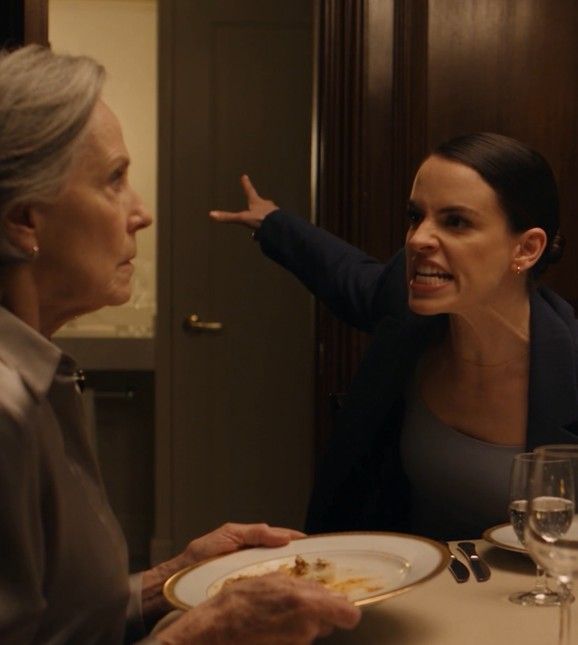
“Go eat in the bathroom, Margaret. You’re used to it.”
My daughter-in-law Amber said those words in front of more than fifty people at her fifteenth-anniversary party with my son, Steven. Someone at the table laughed. Another guest followed. Soon the private dining room rang with the kind of laughter that makes a person feel as though the floor has dropped away beneath her shoes.
I was seventy-two, wearing an ivory dress chosen especially for the evening. The Crest Room shimmered with white orchids, golden lights, crystal glasses, and a towering anniversary cake. I had hoped to celebrate fifteen years of my son’s marriage. Instead, Amber was pointing me toward a hallway because she had not left a place for me at the table.
“Steven?” I asked.
He looked up from his phone for a single second, then dropped his eyes. His silence told me that I was expected to accept the humiliation quietly, just as I had accepted so many smaller humiliations before it.
What nobody laughing knew was that I had paid for the musicians, flowers, imported wine, menus, and dining room. The charges were going onto a corporate card I had allowed Steven to use. For years I had also transferred twenty-five thousand dollars into his account every month. I had rescued him from debt, helped maintain his luxury condo, and paid for a life Amber proudly described as one they had built themselves.
Amber examined my dress as though it offended her. “You’re better at cleaning things anyway. Don’t make everyone uncomfortable.”
I waited one last moment for Steven to stand. He remained seated.
I picked up my purse, crossed the dining room, and stepped into the cold night without letting anyone see me cry. Through the restaurant window, I watched servers pour champagne beneath chandeliers. The people inside seemed unaware that anything important had happened.
I had spent forty-five years building a business large enough to sustain their comfortable world. Yet I had been told to eat beside a bathroom sink.
In my aging gray sedan, I called the attorney who had spent months preparing an offer for my company.
“Mrs. Herrera?” he answered.
“Activate Plan B.”
He paused. “The buyers are still prepared to proceed at two hundred million. Shall I tell them you’re ready to finalize the process?”
“Yes. And stop Steven’s monthly transfers.”
“And the condo?”
“It remains in my name. We will handle that properly, but I will not fund their life another day.”
He promised to send the necessary instructions and documents.
My phone vibrated. STEVEN filled the screen. Through the glass, I saw a waiter beside his table holding a bill, while Amber’s smile vanished and a manager approached.
Then a second message appeared, this one from the restaurant manager, and I realized Steven had told them something about my card that I had never authorized.
The screen glowed against my knees. The manager’s message was courteous, almost apologetic: Your son has advised us you personally guaranteed all outstanding charges, including services added this evening. Could you please confirm that arrangement?
I read it twice. Then I turned off my engine, stepped out of the sedan, and called the number beneath the message. A man named Daniel answered immediately. Behind his measured greeting I could hear glasses clinking and someone speaking too loudly near a microphone.
“No,” I told him. “I have not personally guaranteed additional charges. I authorized a defined budget through my company for this celebration. I need an itemized statement, including the contract and who approved every addition.”
He was silent for a heartbeat. “Mrs. Herrera, I appreciate your clarification. Your son indicated the account had no spending limit.”
“He was mistaken.”
Daniel lowered his voice. He explained that Steven and Amber had added a premium liquor package, another musician, take-home gifts for their guests, and a late-night champagne service. The additional charges had been presented as a family business expense. Suddenly the evening seemed less like a party and more like an elaborate way to test the boundaries of my generosity.
I asked Daniel not to embarrass the employees by making a public spectacle. I also told him that the restaurant deserved payment for services legitimately provided. My company would honor expenses I had expressly approved; the rest needed a proper discussion with the people who had requested them. I would not use a payment dispute to punish waiters who had done nothing wrong.
As I spoke, Steven appeared behind the glass doors. He had taken off his jacket and was walking with the nervous speed of a man searching for an exit. Amber followed him, her sequined dress catching the light. They spotted me beside the sedan and hurried outside.
“Mom, what are you doing?” Steven demanded. “Daniel says you’re changing the agreement.”
“I am confirming the agreement,” I said. “There is a difference.”
