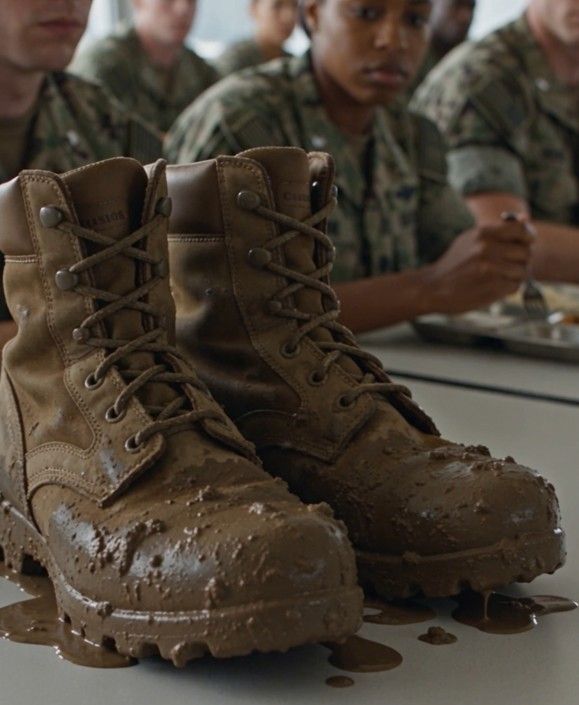
“You put field mud where people eat. Yes.”
The command master chief folded his arms.
“Captain?”
Logan wiped the table.
No one laughed.
That was important to Daniel. Humiliation was not the point. The mess was.
When the surface was clean, Ward asked Daniel to join her in the conference room. He shook his head.
“Lunch rush starts in twelve minutes.”
“We can find someone else.”
“You already did. Me.”
Ward almost smiled.
“After the rush, then.”
Logan watched Daniel roll the tray cart toward the dish room.
His expression had lost every trace of certainty.
The explanation came later that afternoon.
Daniel Cross had retired from the Navy seven years earlier after thirty-one years of service, most of them inside special operations support and senior enlisted leadership. He had trained operators, planned missions, reviewed failures, and spent the last years of his career teaching senior leaders how quickly technical excellence could be undermined by bad judgment.
After retirement, he resisted every offer to become a permanent consultant.
He liked his garden. He liked fixing old motorcycles. He liked mornings that did not begin with briefings.
Commander Ward finally persuaded him to attend a three-day command conference on leadership culture.
Then the dining facility lost several civilian workers to illness the same week.
Daniel saw the staffing request and volunteered to help while he was on base.
Ward had laughed when he asked for a gray work shirt.
“You are speaking to captains on Thursday,” she told him.
“Then I can wash trays on Wednesday.”
He had been doing exactly that for nine mornings because the staffing shortage began before the conference.
Nobody had been told who he was.
Daniel preferred it that way.
The dish room showed him things conference rooms never did.
He saw who carried their own tray back. Who thanked civilian workers. Who treated a missing fork like a crisis. Who became a different person when they believed the person across from them could not affect their career.
Logan had revealed himself early.
