Michael stared at me. “You never told me.”
“I wasn’t ready to talk about it,” I said. “I wasn’t ready to think about after. But Evelyn also wrote this.”
I read the last paragraph of her letter out loud, my voice thin but clear.
“If someone ever needs a room, give them the room, not the house. Let them stay as family, not as a contract. A door you open yourself never feels like a wall someone built around you.”
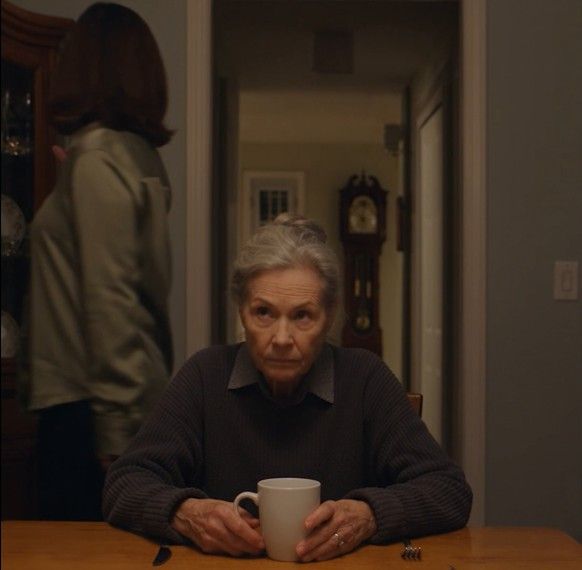
The grandfather clock ticked.
Diane pressed both hands to her chest. Lauren stared at the letter like it was a mirror.
I folded the paper back up. I looked at Diane.
“Diane, you are welcome here,” I said. “Not because a paper says you have rights to my walls. Because there’s a guest room with a good bed and a window that gets morning sun, and because my wife would have wanted me to offer it properly. You can stay. For as long as you need while you figure out your next place, with help. A few weeks, a few months. We will set a date together, all of us, out loud, with no surprises. You will be a guest, and you will be respected as one.”
Diane’s mouth opened. Tears slipped down her cheeks unchecked now. She nodded, unable to speak.
I looked at Lauren.
“And you,” I said, not unkindly, but firmly, “will tear up that agreement tonight, in front of all of us. You will call your cousin and tell him it was wrong. You will apologize to your mother for lying to her, and to my son for putting him in the middle, and to me for trying to take what was not offered. And then you will sit at this table and we will talk like a family about how we actually help Diane without anyone being tricked.”
Lauren wiped her face hard with her palms. She crawled over to the table on her knees, took the stapled papers, and tore them straight down the middle. The sound was loud and clean.
She tore them again. And again. Until the pieces fell like confetti over the crayon drawings.
“I’m sorry, Mom,” she whispered to Diane, her voice raw. “I’m so sorry. I was so scared you’d think I failed you.”
Diane got out of her chair and knelt on the floor and pulled her daughter into her arms, the way mothers do when their children are still small, even when they are grown.
Michael put his hand on his wife’s back. He looked at me over her shoulder, his eyes asking if he was still welcome at the table.
I held out my hand to him. He took it. His grip was tight and warm.
Maya and her brother watched, quiet, absorbing every second. They would remember this night when they were older, I knew. Not the fight, but the repair.
Later, after Diane had gone home with the promise that she would come for dinner on Wednesday to talk about a real plan, after Lauren and Michael had taken the kids to the car — Lauren pausing at the door to say, barely audible, “Thank you for not humiliating me in front of my mom” and I answered, “We don’t humiliate family, we tell them the truth” — I stayed at the dining table alone for a while.
The house was warm again. The chandelier hummed.
I picked up the torn pieces of that agreement and dropped them in the trash. I washed the coffee cups. I straightened the placemats.
On the fridge, under a magnet shaped like an apple, I found a new drawing Maya must have slipped there while I wasn’t looking. It was the same house, the same oak tree, but now there were five stick figures holding hands in front of it, and one extra small figure in the guest room window, waving.
Under it, in Michael’s hurried handwriting, was a note: Dad — We will ask next time. We promise. Love, M.
I touched the drawing with the tips of my fingers.
Then I turned off the dining room light, and the grandfather clock kept ticking, steady and unhurried, marking the time of a house that was still mine, still ours, still home.
Outside, the oak tree moved in the autumn wind, its leaves brushing the window of the guest room that would be ready when we were ready, on our terms, with the door open because we chose to open it.
And for the first time since Evelyn died, the house didn’t feel too big at all.
