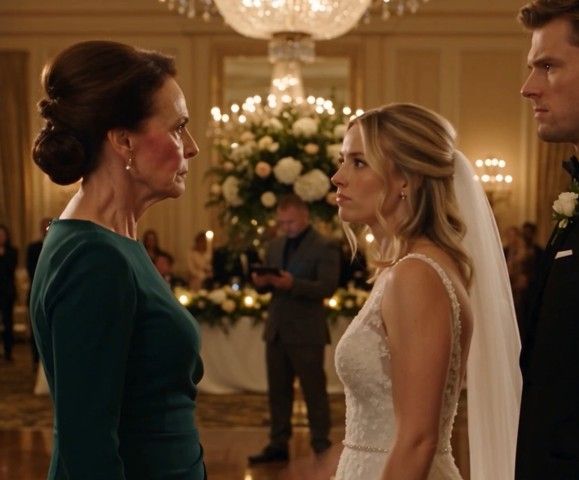
Margaret did not tell them what to do. She told them what she had failed to do.
She told them to read every page.
To keep copies.
To speak the first time a request made them afraid.
To remember that saying no did not turn love into cruelty.
Months passed.
Spring came to the garden.
The roses opened.
Margaret received a call from the community arts center. Tiffany had been volunteering there and wanted to know whether Margaret would allow them to use the preserved flowers from the canceled wedding for a small exhibition about new beginnings.
Margaret almost said no.
Then she asked what the exhibition was called.
“Things We Carry Forward,” the director said.
Margaret looked toward the roses.
“What would happen to the flowers?”
“They would be dried and placed in handmade paper. People could write something they were choosing to leave behind.”
Margaret considered it.
“Use them.”
“Are you sure?”
“Yes.”
The flowers had been purchased with her money, under a promise that had turned poisonous. She wanted the promise gone. She did not need the flowers to disappear with it.
A week later, Margaret entered the arts center.
The roses and orchids had been pressed flat between sheets of paper. Their colors remained vivid. Children were cutting leaves into small shapes. Older women wrote messages at long tables.
Tiffany stood near the wall, arranging the flowers into a frame.
She saw Margaret and froze.
Margaret stopped several feet away.
“Hello,” Tiffany said.
“Hello.”
“I didn’t know if you would come.”
“Neither did I.”
Tiffany looked at the frame.
