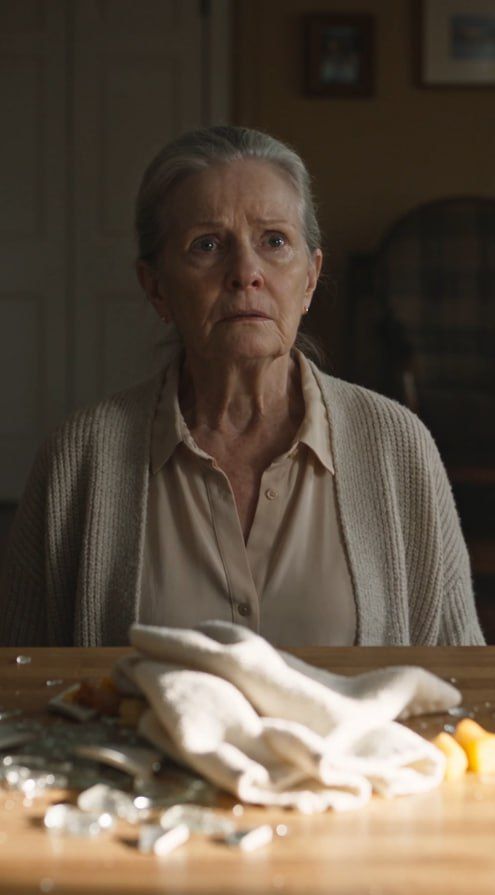
Everyone settled into their seats.
Amelia thanked me for inviting them.
Ruth asked June about her school play.
Daniel passed the bread.
And beneath my hands was the same old oak table, carrying a piece of the farmhouse where my mother had once called me home.
I looked around the room.
Not everyone sitting there shared my blood.
Not everyone had known me for years.
Some had hurt me.
Some had helped me heal.
And some had come into my life simply because I had opened the door.
But every person at that table was there because I wanted them there.
For the first time in a long while, that choice was entirely mine.
June leaned against my shoulder.
“Grandma?”
“Yes, sweetheart?”
“Are you happy?”
I looked toward Peter’s photograph on the mantel.
Then I looked at Daniel, who was laughing with Ruth over something Amelia’s little boy had said.
I looked at the candles trembling in the warm light, the dishes filling the table, and the winter evening settling peacefully beyond the windows.
“Yes,” I answered.
And I meant it.
Because I had learned that growing older didn’t mean surrendering my voice.
That loving my children didn’t mean allowing them to erase me.
That forgiveness could exist alongside boundaries.
And that a home wasn’t truly safe because the doors were locked or the mortgage was paid.
It was safe when the people inside it respected one another.
Peter had understood that long before I did.
He had built a table from the pieces of a home I thought I had lost forever, and he’d hidden a letter beneath it, waiting patiently for the day I would discover what he’d given me.
I rested my hand on the warm oak.
