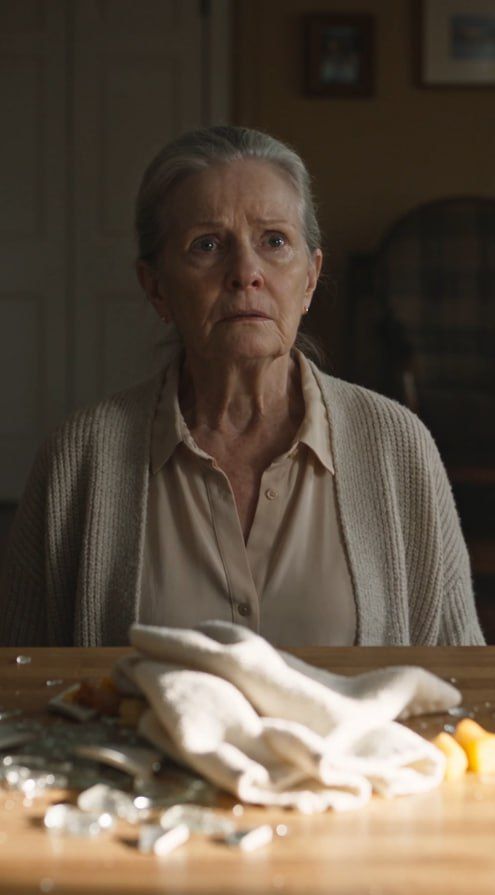
“He’d have said, ‘Ellie, stop trying to hold up the roof by yourself. The house is already standing.'”
I laughed through my tears.
That sounded exactly like him.
Over the following months, the legal process moved slowly, but it moved forward.
Vanessa’s explanation changed repeatedly. At first, she claimed that I had authorized everything verbally. Later, she blamed an administrative misunderstanding.
But the records contradicted her.
The investigation established that the authorization document was fraudulent and that Vanessa had knowingly submitted false information to obtain financing against property she did not own.
Ultimately, she entered a guilty plea to charges arising from the forged financial documents and attempted fraud.
The court imposed a suspended custodial sentence, supervised probation, and financial penalties. She was also required to pay restitution for documented losses and investigation-related expenses ordered by the court.
Separate professional disciplinary proceedings resulted in the revocation of her real estate license.
Her business closed.
The financial scheme she’d constructed around my home was finished, and the damage to her professional standing could not simply be undone.
But the most important thing was not the courtroom outcome.
It was that I could finally stop being afraid of what might arrive in my mailbox.
Daniel filed for divorce.
He told me the marriage had already been deteriorating long before he discovered the forged documents. He had been hiding their financial troubles from friends, avoiding difficult conversations, and allowing Vanessa to make decisions because confronting her seemed harder.
“I kept calling it keeping the peace,” he admitted one afternoon. “But there wasn’t any peace. I was just afraid of an argument.”
June remained close to both parents while custody arrangements were worked out. Daniel made sure she had access to counseling, and I was relieved when her counselor encouraged all of us to avoid making her responsible for the adults’ mistakes.
Vanessa was still June’s mother.
Whatever Vanessa had done to me, I wouldn’t ask a child to carry hatred on my behalf.
One Saturday afternoon, June came over to bake cookies.
She was quieter than usual.
While we mixed the dough, she suddenly asked, “Grandma, can someone do something really bad and still love you?”
I set down the wooden spoon.
“Yes, sweetheart. Sometimes people who love us make terrible choices.”
“Does that mean we have to forgive them?”
“No.”
She looked startled.
“We can hope they change. We can even love them. But we don’t have to pretend something didn’t hurt us.”
June considered that.
