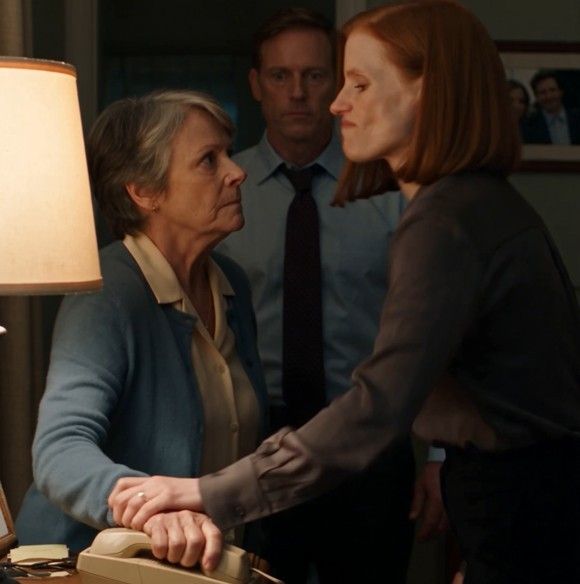
“Because I lost my glasses.”
“Because you wouldn’t sign something you couldn’t read.”
Margaret let out a breath that shook all the way through her.
The investigation moved more slowly than supper had unraveled.
Gabriella helped Margaret find the right people to secure her records and address the attempted sale. The prospective buyer stopped the transaction when contacted. No transfer had been completed.
Then he supplied the messages.
Linda had described Margaret as confused but cooperative. She had sent the falsely signed authorization, accepted an advance, and promised vacant possession. In another exchange, she had asked whether photographs could be taken without Margaret present.
Edward’s messages supplied the rest: the signature image, the discussion of the paperwork, his warning that Gabriella must not learn about it.
Margaret read that line twice.
Her son had not merely been weak at dinner.
He had been guarding a plan.
Edward moved into a rented room near a warehouse where he found work. With both parents’ agreement, the children stayed with Margaret while arrangements were made, then gradually spent regular nights with him.
Linda stayed with her sister.
She sent Margaret one message claiming the whole affair was a misunderstanding.
Margaret forwarded it to the investigator and did not reply.
Months later, the evidence became the basis of guilty pleas. Linda’s sentence included imprisonment and repayment obligations. Edward’s cooperation and lesser role affected his sentence, but did not erase it: he received probation, community service, and his own obligation to repay what had been taken.
The attempted sale was canceled. Margaret’s ownership remained intact.
At sentencing, Linda looked toward her only once.
“I was trying to provide for my family.”
The buyer’s correspondence lay in the record. So did the altered document. So did the messages about removing Margaret before photographs.
For once, Linda could not replace what she had done with a louder version of events.
Her marriage ended. Her access to Margaret’s home ended. Her ability to speak for Margaret ended.
None of those doors reopened.
Edward came to the house on a Saturday afternoon after asking permission. He remained on the porch until Margaret stepped aside.
He carried no flowers.
“I thought bringing something might look like trying to buy my way in.”
“It would.”
He nodded.
They sat at opposite ends of the kitchen table.
“I told myself you would agree eventually,” he said. “That made it easier to act like you already had.”
