“I sold it,” I said.
“Good,” she said fiercely. “Good.”
We ate soup at the kitchen table, the contract pushed to the side to make room. The dog slept on Daniel’s old side of the couch and my sister didn’t shoo him off.
Later, after she left, I took Renee’s twelve hundred dollars out of the envelope — she had left it anyway, despite what I said, folded in a little paper band that said *thank you* in her handwriting — and I put it in a new envelope. I wrote on it: *For Renee — first month somewhere safe.* I would mail it to the return address on the prepaid phone’s box. She had included it.
I packed one box that night. Just one. My books. My mugs. The deed copy. The letter, folded carefully. I left Daniel’s tools in the garage for Caleb to pick up with the officer present, because I was done carrying what wasn’t mine.
The next morning at ten, I signed the last papers at Marissa’s office. The buyer was a young couple who had lost out on three other houses. The woman cried when she saw the keys. She said, “We will love it.” I believed her.
The wire hit my account at 10:47. Enough to pay off the small loan my parents had given me for the down payment years ago, enough to rent a bright second-floor apartment near my sister with a balcony that got morning sun, enough to finally breathe without checking a balance first.
I drove back to Laurel Way one last time that afternoon to do the final walkthrough. The house was empty except for the light. Diane’s lemon bar pan was still in the cabinet. I left it.
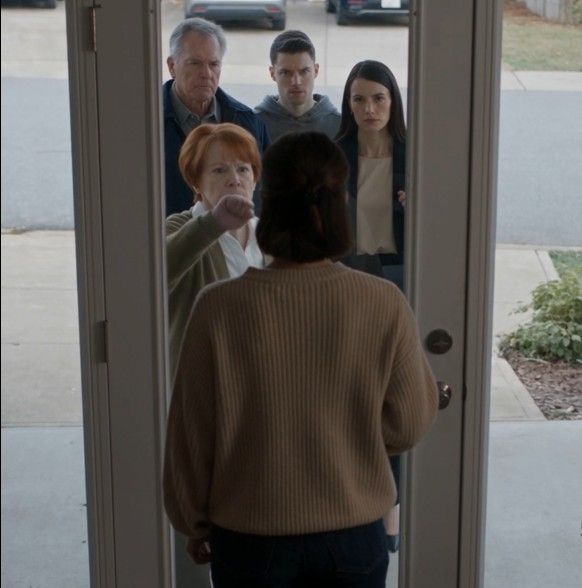
On the porch, where five people had pounded and demanded, there was now just a single footprint in the thin snow that had fallen overnight. Mine, from this morning.
I locked the glass door for the last time and left the key in the lockbox for the new owners.
Three weeks later, on a Saturday, I had a small dinner in the new apartment. Just me, my sister, Marissa, and — to my own surprise — Renee.
She came shyly, holding a little plant, wearing a thicker coat. She had found a new job at a clinic. She had used the twelve hundred to get a studio of her own. She told me she had listened to the voice memo once more and then deleted it. I told her I had kept the letter but I didn’t read it every day anymore.
We didn’t talk about Daniel much. We talked about landlords and plants that refuse to die and how good it feels to pay a bill that is only yours.
At one point my sister got up to get more bread and Renee and I were alone by the window. The late winter sun came in and made the little apartment glow.
“Do you ever feel guilty?” Renee asked quietly. “For being relieved?”
I looked at her — this girl who had been made into a villain by a family that needed one — and I answered honestly.
“Every day,” I said. “And then I feel free for a minute. And I’m learning to let the free part stay longer.”
She nodded, her eyes bright, and we both laughed a little, wetly, because there was nothing else to do with that kind of truth.
That night, after everyone left, I stood at my balcony door with a mug of tea. The city was quiet. No one was pounding. No one was demanding. The glass in front of me was clean and it was mine.
I pressed my palm to it, not to keep anyone out, but to feel how warm the sun had made it all day.
And I finally, completely, let go.
