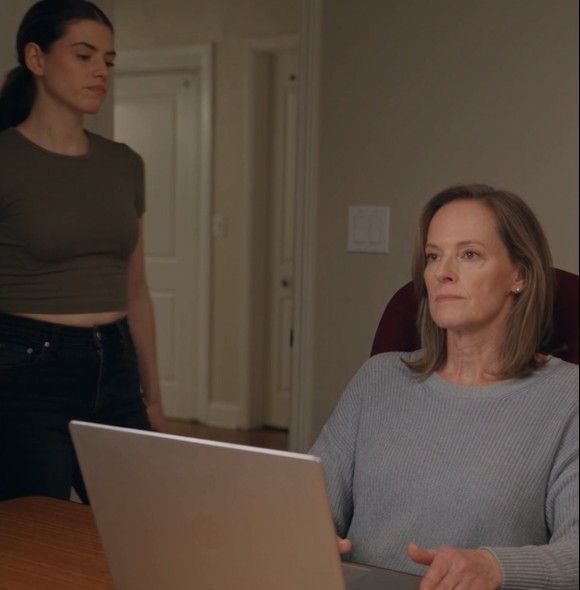
I slid the last document out of the folder. It wasn’t a photograph. It wasn’t a legal threat.
It was a formal thirty-day notice to vacate. Already filled out. Already dated. With a blank line for a signature.
And underneath it, a second document.
Savannah frowned. Derek leaned over her shoulder.
Christopher went pale.
“What is that?” Savannah whispered.
“The first one is what my attorney told me to give you,” I said. “It’s legal. It’s enforceable. Because this is my separate property, I can ask any guest to leave, even if my husband invited them. I could have handed it to you on day one.”
I placed my hand flat on the second document.
“This is what I actually want to do.”
The second document was a residential lease. Simple, one page. Month-to-month. For the small two-bedroom cottage on Elm Street. Three blocks away. The one with the yellow door and the overgrown rose bushes that I’d been renting out for six years since my mother passed.
The rent line was filled in: $600 per month.
Derek blinked. “That’s… that’s impossible. That area is twelve hundred minimum.”
“It is,” I said. “For anyone else. For three years, I’ve kept that cottage for my mother’s sister, but she moved to Florida last month. It’s empty. It’s clean. It has a garage for your tools, Derek. And an office with a door that closes for your calls.”
Savannah’s hand hovered over the paper but didn’t touch it. Her eyes darted between the two documents, between punishment and something she didn’t understand.
“I don’t understand,” she said, her voice thin. “Why would you… after we treated you like this, why would you offer us a cheap place?”
Christopher made a choked sound. He finally understood. His eyes met mine over his daughter’s head, and they were wet and full of shame.
“Because I wasn’t building a case to destroy you,” I said, and the words hurt my throat. “I was building a record so no one could ever say I was cruel. So no one could ever say I threw a young couple out with nowhere to go. So when I asked you to leave my home, it would be clear that I had tried, that I had documented, that I had been patient, and that you had been warned.”
I took a breath. The kitchen light fell hard across the deed, making the county seal shine.
“But I also know what it’s like to be young and scared about money,” I continued. “I bought this house with my mother’s life insurance after she died. Every hardwood board, every towel, every shelf in that pantry — I chose it while I was grieving her. It’s not just a house. It’s the only thing she could leave me. And when your father told you that you could have it, he wasn’t just giving away rooms. He was giving away my mother’s goodbye.”
Savannah’s tears finally spilled over. She didn’t wipe them. She just stood there, letting them run, her shoulders shaking once, hard.
“I didn’t know,” she whispered. “Dad never told me it was yours. He said it was both of yours. He said…”
“I know what he said,” I said gently. “And I know you chose to believe him because it was convenient. Just like I chose to stay quiet for two weeks because it was easier than fighting him.”
I looked at Christopher then, and let him feel the full weight of it.
“You told them I would come around eventually,” I said. “Do you know what eventually means to a woman who has been told all her life to be accommodating? It means erasing herself piece by piece until there’s nothing left to fight for. It means egg whites at six a.m. in her own kitchen while she stands like a guest.”
Christopher’s hands were gripping the chair so tight his knuckles were white. He tried to speak, stopped, tried again.
“Linda, I’m sorry,” he said, and his voice broke completely. “I am so sorry. I didn’t think… I didn’t think you would care this much. I thought houses were just… houses.”
“They’re not,” I said.
Derek, who had been silent, cleared his throat. His earlier anger had drained away, leaving something raw and embarrassed behind. He looked at the spilled coffee, grabbed a dish towel, and knelt to wipe it without being asked. The gesture was small and clumsy and real.
“We were jerks,” he said to the floor, not looking at me. “We were. Savannah and I… we got so used to your dad hyping this up, saying you were excited to have us, that we just… we acted like we owned the place. My mom would be ashamed of me. I’m ashamed of me.”
Savannah sank back into her chair as if her legs had given out. She stared at the lease for the cottage, at the $600 figure written in my steady handwriting.
