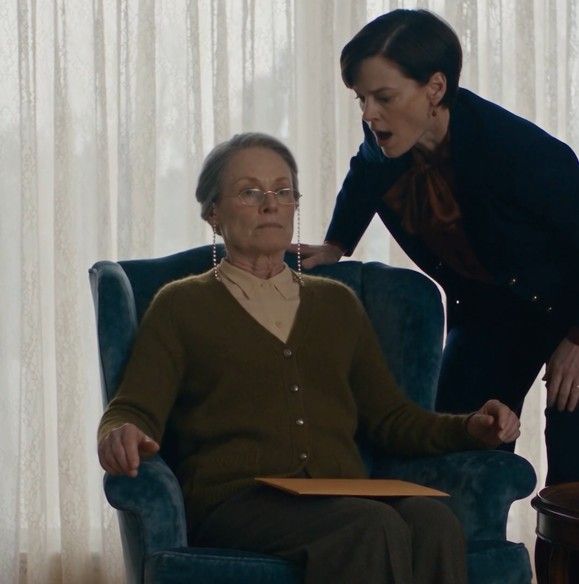
“I said you were angry.”
“That was right too.”
Michael squeezed her hand.
“She said anger might be easier to bear.”
“Perhaps.”
“Do you want to see her?”
Eleanor looked at the blue chair.
“Not yet.”
He nodded.
The answer did not need defending.
Months passed.
The court case ended. The repayment order was completed. Olivia moved into a small rented room near the bus station and began working at a bakery. Claire exchanged letters with her, each one carefully read by Michael before being delivered, not to control the conversation but to keep the promises about safety.
The letters grew longer.
Olivia never asked for the house.
She asked about Claire’s exams, about Eleanor’s tea, about whether the blue chair still stood by the window.
Eleanor answered only when she wished.
One spring morning, a letter arrived with no return address.
Eleanor opened it while sitting in the blue chair.
Inside was a photograph.
It showed the chair in the secondhand shop window, thirty-two years earlier. Eleanor stood beside it, young and uncertain, while Daniel held a paper bag of groceries. On the back, he had written the date.
There was also a note from the shop owner.
Daniel had apparently returned to the store a week before he left. He had asked the owner to keep the photograph and send it to Eleanor if he ever failed to come back.
The owner had forgotten.
For three decades, the photograph had rested in a drawer beneath old receipts.
At the bottom of Olivia’s letter, there was one sentence.
I finally understand why you kept it.
Eleanor held the photograph against her chest.
Claire found her there.
“What is it?”
Eleanor showed her.
