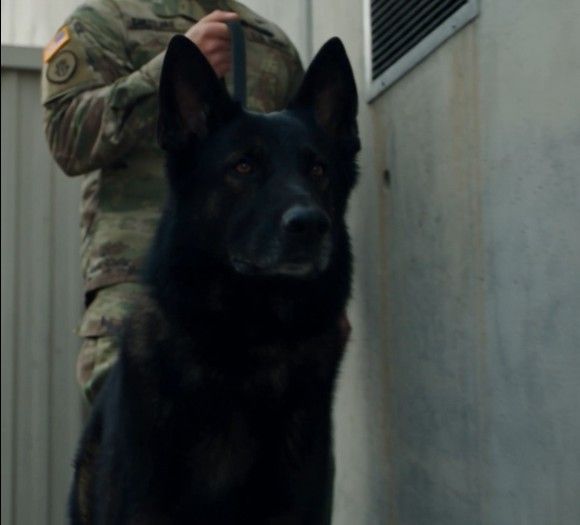
“The growl?”
“Never at me outside training.”
Ford nodded slowly. “I should have listened sooner.”
Caleb was too surprised to respond.
The hazardous-material team entered only after exterior monitoring established a safe approach. Their first report confirmed a dangerous vapor inside the maintenance room. The source was not an attack or a deliberate device. A container of industrial maintenance chemical had developed a leak after being stored improperly near equipment that cycled on automatically. When a ventilation unit started, it pulled vapor toward the grille Ranger had been watching.
That explained the mechanical hum.
It also explained why the building had been cleared twenty minutes earlier. During the initial check, the concentration near the doorway had been much lower and the automated equipment was not running. Personnel had visually searched the space without using the kind of detector the security technician later carried. The hazard grew after the search.
The unlocked-door issue had a separate explanation. The maintenance supervisor had expected the door to remain available for routine access. Someone on the early shift locked it after noticing an odor and leaving to find a supervisor—but failed to report why. By the time the message traveled through the maintenance chain, the security sweep was already arriving.
The investigation found no sabotage.
Caleb felt relief and irritation at the same time. Part of him had imagined that because Ranger’s reaction was dramatic, the explanation would be dramatic too. Instead it was a chain of ordinary failures: improper storage, an automatic system changing conditions, a worker leaving without using the emergency reporting channel, and a security route treating a twenty-minute-old clearance as if it could not become outdated.
Ordinary failures could still hurt people.
The chemical was contained without anyone entering the highest-concentration area unprotected. No delegation member was exposed. Two maintenance workers who had briefly passed near the building earlier were evaluated and released without injury. Ranger was observed for the rest of the day and remained healthy.
Only after the area was secure did the argument begin.
Ford asked Caleb for a full statement. Caleb described every detail, including the part he was ashamed of.
“I tightened the leash when he refused.”
Ford looked up. “You were following my instruction.”
“He was giving me information I recognized as abnormal. I still treated it like a control problem for several seconds.”
“Several seconds is why we are standing here and not writing an exposure report for half the delegation.”
Caleb shook his head. “That does not make it the right instinct.”
Ford studied him. “Fair. Put that in your statement.”
Caleb did.
The review board interviewed the maintenance supervisor, security technician, Ford, Caleb, and the personnel who had performed the first search. Nobody was disciplined for failing to smell a hazard before it intensified. The board focused on what information existed and when.
The early-shift worker received formal counseling for locking the room after noticing an unusual odor without reporting through the emergency channel. Maintenance procedures were changed so any unexplained odor, leak, or unexpected equipment state triggered immediate notification rather than an informal search for a supervisor.
Security procedures changed too. A building marked clear would no longer be treated as permanently cleared during a long event. If a working dog showed a trained hazard response or if conditions changed—locked door, unexpected equipment running, unusual odor—the prior clearance had to be reconsidered.
Ford added another sentence to the route brief himself: An animal alert is information, not insubordination.
Caleb read it and looked at him.
“That for me or you, sir?”
Ford almost smiled. “Yes.”
The incident became a training case for military working-dog teams. Caleb hated the first version of the story because instructors called Ranger a hero and him the handler who trusted his dog.
He corrected them.
