It did not explain away my name on that page.
“I asked you once,” Mark whispered. “About selling. In the kitchen.”
I remembered. He had mentioned a smaller place, somewhere easier. I had told him I wanted to stay.
“You said no,” he continued. “I told her.”
There it was. The last shelter gone.
He had known my answer before he signed.
I picked up my telephone.
Vanessa stepped forward. “You’ll send your own child to prison?”
“I’m going to tell the truth. What happens because of it belongs to the people who did this.”
My fingers trembled so badly that Ruth offered to dial. I shook my head.
I needed to make the call myself.
When the operator answered, I gave my name and address. I said that someone had used my signature without permission in an attempt to sell my home.
Mark wept without making a sound.
Vanessa watched me as though I had become a person she had never met.
CHAPTER 4 – The Cost of the Truth
The officers arrived after the candles had burned low.
They spoke to us separately. Ruth stayed beside me while I described the funeral card, the letter, the things I had never agreed to. One officer asked whether I felt safe with Mark and Vanessa in the house.
I looked toward the kitchen doorway.
“No.”
Saying that hurt differently from anything else that night.
Arrangements were made for them to stay elsewhere. Before leaving, Mark went upstairs with an officer nearby and packed a bag. Vanessa stood in the hall demanding access to her things, then demanding that Julian understand this had been a family dispute.
He gave the officers the folder and the payment details.
When she realized he would not withdraw his complaint, she pointed at me.
“She wanted us here. Ask her. She begged us to stay after the first month.”
I had asked whether they were comfortable. I had said there was no hurry.
In her mouth, even my welcome sounded like evidence against me.
“Yes,” I said. “I wanted you here.”
For the first time, she had nothing ready.
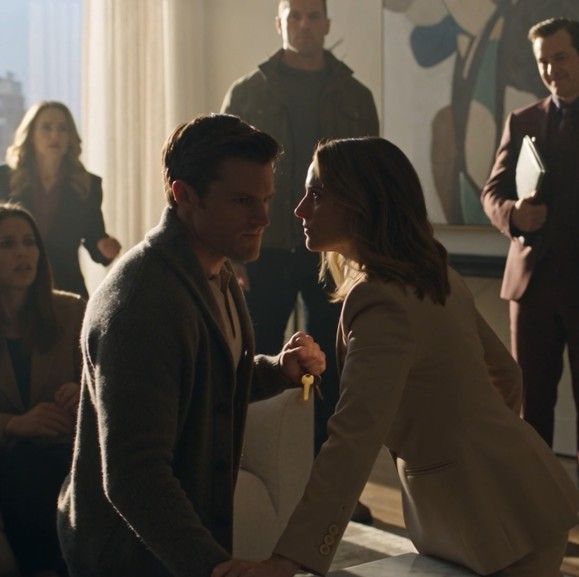
Mark left his key on the hall table. Vanessa’s followed only after he held out his hand.
I did not mistake the return of two keys for the end of their occupancy rights. The following week, my own solicitor dealt with the notices and obtained written agreements for them to leave permanently. Their remaining possessions were collected at an arranged time.
I was at Ruth’s kitchen table when that happened.
We were not friends yet. We ate toast while her elderly dog pressed its head against my knee. She talked about a broken fence until I could speak about the house without losing my breath.
The investigation took months.
My solicitor confirmed the title remained in my name and put additional safeguards in place. Julian’s agreement was formally set aside. I owed him neither a house nor repayment of money I had never received.
The bank records showed where his deposit had gone: into Mark and Vanessa’s joint account, then out to creditors within hours.
The electronic records were worse.
Vanessa had made the authorization on her laptop. The scan of my funeral note was still there, along with drafts of the letter. Messages between them discussed my refusal, the copied signature, and the plan to present a move as something already decided.
Mark had replied to one message with six words.
I don’t want to tell her.
I read that sentence in my solicitor’s office and cried harder than I had cried at the dinner.
Not because he had wanted to protect me.
Because telling me had been the part he wished to avoid.
Vanessa claimed Mark had invented the whole scheme. Then she claimed I had given permission verbally. Her own dated messages contradicted both accounts. A message instructing him to sign as witness had been sent before the letter was printed.
Mark admitted his part through his solicitor and gave investigators access to his accounts and messages. It mattered, eventually, that he stopped lying.
It did not erase his signature.
Vanessa’s employer dismissed her after its own investigation into her deception of Julian and her use of work email to support it. The prosecution followed. She contested the charges, and the evidence was laid out in a courtroom where she could not interrupt me with a smile.
I gave my testimony with my hands folded.
Her lawyer asked whether I had sometimes complained of loneliness.
“Yes.”
Whether I had relied on my son.
“Yes.”
Whether grief had affected my memory.
“I remember being sad,” I said. “I also remember saying no.”
Vanessa was convicted and received a prison sentence. The findings against her rested on the forged documents, the banking trail, and her messages. No version of events she offered survived all three.
Mark pleaded guilty. His lesser role, cooperation, and previous record were considered at sentencing. He received a suspended prison sentence, unpaid work, and obligations he would have to meet under supervision.
They were both ordered to make restitution. What the bank recovered was credited first. The remaining money was repaid through the sale of their assets and enforceable payments; months later, Julian’s solicitor confirmed he had recovered the full deposit.
Their marriage ended during the proceedings.
I felt no pleasure when Mark told me. I had wanted him to choose a better life before it required a court order.
Outside the courthouse, Julian stood beside Ruth and me.
“I should have spoken to you alone before sending anything,” he said. “I’m sorry I helped make you invisible in your own home.”
