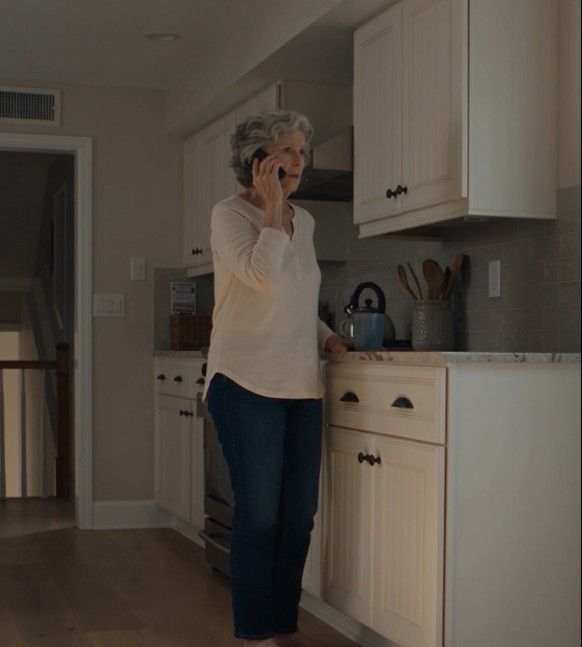
“Did you tell your family I had invited them?”
“I told them we could all stay at your new place.”
“So neither of you checked with me.”
“We thought family was different.”
“Family should be different,” I said. “Family should make asking easier, not unnecessary.”
She inhaled.
For a moment I expected a fight. Instead, she said, “My mother already bought groceries for the drive. My sister moved her shifts. Everyone has been planning for weeks.”
“I am sorry they were put in that position.”
“But you still will not let them stay.”
“No.”
There was a long pause.
Then Elena surprised me.
“Okay.”
Not warmly. Not happily. But clearly.
I had expected rage because rage would have made my role easy. I could have turned her into the villain and myself into the injured mother. Her quiet acceptance left me with something harder: the understanding that people can participate in entitlement without being monsters, and that a boundary still matters even when nobody is purely bad.
“Julian is furious,” she said.
“He will survive being furious.”
A small sound came through the phone. Almost a laugh.
“Probably.”
Before we hung up, I gave her the names of two extended-stay hotels I had passed while moving in. I did not offer to call them. I did not check prices. I did not volunteer my credit card.
That distinction mattered.
On Friday afternoon, Julian appeared on my porch.
He had not told me he was coming.
For one irritated second, I nearly left him standing outside just to make a point. Then I opened the door and stepped onto the porch, pulling it closed behind me.
His eyes flicked to the door.
“You’re not inviting me in?”
“Did you come to visit, or did you come to argue?”
He looked away toward the street.
“The hotel is costing us a fortune.”
“I imagine eighteen people require a lot of rooms.”
