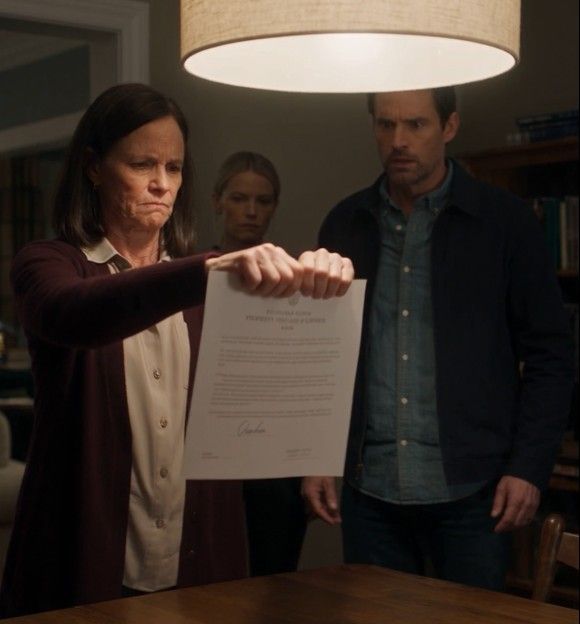
“I kept checking.”
“I know.”
“No. You don’t know that part.”
She nodded once.
“You’re right.”
My younger son, Daniel, arrived the following morning. He had driven through the dark after hearing what happened.
He started with, “I didn’t know about the papers.”
I stood beside the kitchen counter.
“But you knew about me.”
His shoulders dropped.
“Yes.”
He told me he had called Kenneth privately, told him the message was cruel, then left it there.
“Privately,” I repeated.
“I didn’t want a fight.”
“You let me stand in one by myself.”
He stared at the floor. When he finally looked up, he asked what I needed rather than whether we were all right.
I gave him a shopping list.
Milk. Bread. Apples.
He took it seriously.
There was no single day when the rest untangled.
Mr. Abernathy brought the recorded ownership documents and explained each one without rushing me. The paper I had torn had never conveyed my home. Neither the imitation signature nor Brenda’s declaration made her story true.
My properties remained mine.
The notice on the table had only been a draft. We replaced that first burst of anger with orderly arrangements, deadlines, and advice I could understand.
Kenneth moved into a rented room.
The beach house was taken off every proposed sale listing. The buyer pursued the return of its advance. Account records traced that money into debts Brenda had concealed, including accounts she had opened using Kenneth’s information.
That discovery did not absolve him.
His false statement stayed in the evidence beside hers.
The investigation found the scanned signature among Brenda’s files. There were drafts of the death declaration, messages instructing the buyer not to contact me, and a version history showing her revisions to tomorrow’s date.
There was also the message that finally explained her urgency.
Kenneth had written that he wanted to speak to me.
