Coffee shops.
A park bench.
A diner halfway between our homes.
He asked about my day instead of my stairs. He stopped checking whether I had taken medication. He stopped calling my neighbors for updates. When he offered help, he waited for an answer.
Sometimes I said no.
He learned not to punish me for it.
One afternoon, nearly a year after Rosewood, I drove back there alone.
Janet saw me in the lobby and looked worried until I smiled.
“I’m not moving in,” I said.
She laughed.
“I wasn’t going to ask.”
I told her I wanted to finish the tour.
Not the tour Daniel and Melissa had staged around a decision already made.
My tour.
Janet showed me the library, exercise room, garden, apartments, and dining room again. I asked difficult questions. She answered them. When I said a room was too small, nobody told me I needed less space at my age.
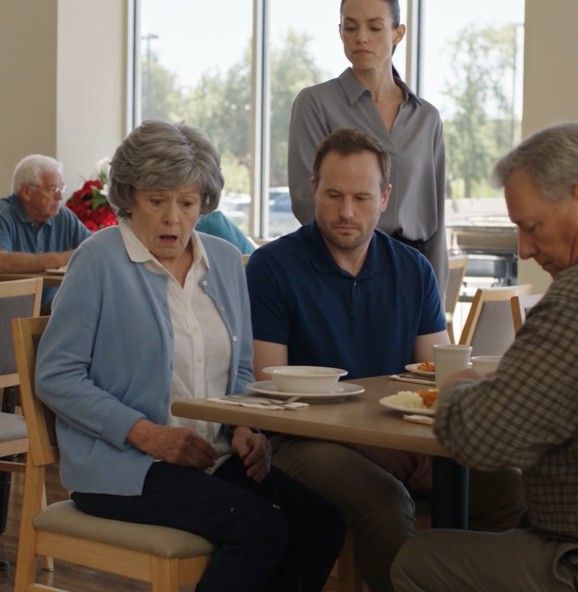
At the end, we returned to the dining room.
I looked at the place where my tray had hit the floor.
“I hated this room,” I said.
“I don’t blame you.”
“I don’t anymore.”
That surprised me as I said it.
Rosewood had not tried to take my house.
People I loved had tried to use Rosewood as the destination for a choice they wanted to make for me.
Separating those things gave me back something I did not know I had lost: the ability to consider help without hearing surrender.
I began attending a monthly gardening workshop there because their horticulture director was better with roses than anyone I knew.
I drove myself.
I went home afterward.
Months later, Janet asked if I would speak to families during a seminar about planning transitions with older relatives. I agreed only if the residents spoke too.
At the seminar, I told one story.
I described sitting in a room while people listed my mistakes as evidence that my preferences mattered less.
