She gave me a tired smile.
“I think so too.”
Madison sent one letter.
It contained no apology. It contained three pages about how abandoned she had felt, how unfairly life had treated her, and how I had always been favored.
I read it once.
Then I wrote back a single sentence.
You were allowed to want more, but you were not allowed to take it from me.
I did not send another letter.
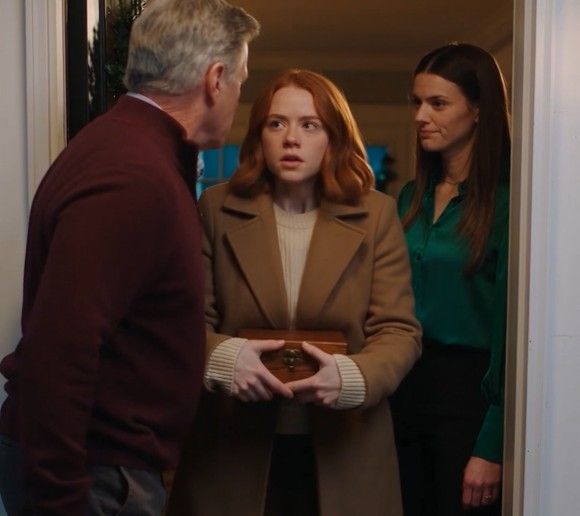
The cedar box remained on my desk.
The brass key opened a safety deposit box filled with Grandpa’s personal papers, photographs, and a second envelope.
I waited two weeks before opening it.
Inside was a handwritten inventory of every person employed by Hale Works, including their start dates, family circumstances, and the skills Grandpa believed they had never been given the chance to use.
At the bottom, he had written:
A company is not its building. It is the promise that people will be treated as people while they are inside it.
Beneath that was a note addressed to me.
You may decide the promise is too expensive. If so, sell everything without shame. But if you keep it, keep it clean.
I cried then, quietly and without trying to stop.
Not because I had inherited control.
Because he had trusted me with a choice.
CHAPTER 5 – Home at Last
By spring, Hale Works had become profitable again.
The company stopped taking vanity accounts and focused on local businesses that needed practical, honest campaigns. Nora established a profit-sharing plan. Employees received regular financial reports. No one had to guess whether payroll would arrive.
The lopsided paper-star tree remained in the lobby long after Christmas.
Mom visited every Sunday.
Sometimes we talked about the past. Sometimes we talked about recipes, books, or the neighbor’s ridiculous dog. Healing did not arrive as one grand forgiveness. It came as repeated proof that neither of us had to perform anymore.
She never asked me to visit my father.
I visited once.
The prison visiting room smelled of disinfectant and old coffee. Dad sat across from me in a gray uniform, his hands folded on the table.
He looked smaller.
“I heard the company is doing well,” he said.
