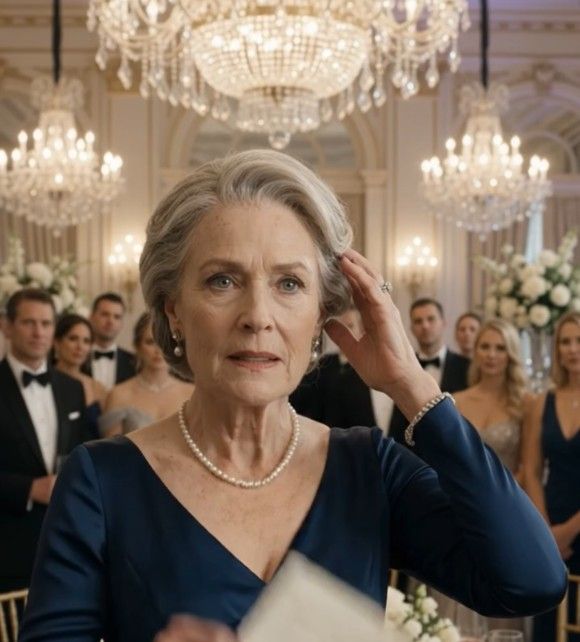
The new plan wasn’t fully executed that night. Avery would prepare the final documents for review and arrange the required signing formalities.
But by the time he left, we had replaced my vague instruction to disinherit everyone with a much more thoughtful set of directions.
Then we returned to the other matter.
The card.
The recording.
The injury.
Avery helped me organize the evidence and the timeline.
Lucia had photographed my scalp that morning, before fitting the wig.
My household security system retained footage of the downstairs hallway and front entrance. Avery advised me to preserve the original files rather than rely on screenshots.
The camera covering the main staircase showed Sabrina going upstairs well after the other guests had left.
It did not show her entering my bedroom, and I wasn’t going to pretend otherwise.
But it helped establish who was awake and moving around my house during the night.
The recorder added two more details.
At the church, Sabrina had said she’d expected me to stay home.
Then she’d told a bridesmaid that my absence was “the whole point.”
The recording did not capture the shaving itself.
It did not prove anyone had put a substance in my drink or tampered with my medication.
And I wasn’t going to make either accusation without evidence.
What it did establish was that Sabrina had anticipated my absence before anyone publicly learned what happened to my hair.
Combined with the note, the photographs, and the household timeline, it gave investigators specific facts to examine.
Avery advised me to make a police report.
I did.
It wasn’t easy describing the experience to a stranger.
I had to explain how I’d fallen asleep.
Who had access to the house.
What I remembered from the previous evening.
How I discovered the shaving.
And why I suspected a particular person.
When the officer asked whether I had confronted Sabrina, I told him about the wedding.
He listened carefully.
