Not because they were gone.
Because I had missed myself.
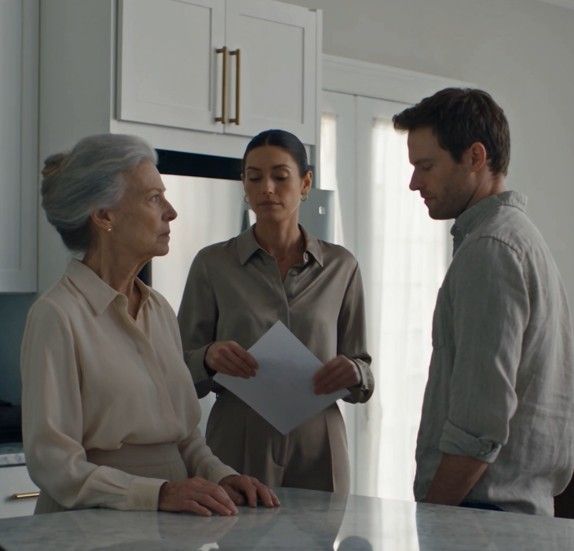
For three months I had become careful in my own home. I waited before entering the kitchen if Vanessa was cooking. I lowered the television after eight even before the rules sheet appeared. I asked whether they had plans before inviting my friend Ruth for coffee.
Nobody had locked a door or taken a deed from me.
I had simply kept yielding inches until one morning I was surprised by how far I had moved.
That frightened me more than Vanessa’s paper.
The next day I called Ruth and invited her over.
“Do I need approval?” she asked after I told her what happened.
“Only if you bring that terrible fruitcake.”
She laughed so loudly I had to hold the phone away from my ear.
We had coffee in the living room beside the bay window. Ruth sat where Vanessa had placed a decorative bench. I moved it to the hallway after she left.
For the next month, I made no major decisions.
That was important.
I did not sell the house to prove independence. I did not change my will in anger. I did not fill every room with guests simply because I could. I let the home become ordinary again.
I cooked breakfast at six one morning just because nobody had the right to call it kitchen hours.
I watched an old movie until eleven thirty and laughed at the absurdity of feeling rebellious.
I left a sewing basket on the dining table for three days.
It was my mess.
I did make one practical appointment after the emotion settled. I met with the attorney who had helped after my husband died and asked him to review the deed, my power of attorney, and my health-care documents. Nothing in them gave Daniel or Vanessa any right to control the house, but the conversation reminded me that clarity is kinder than assumptions. I updated my emergency contacts, named Daniel and my niece jointly for medical decisions if I ever became unable to speak for myself, and wrote down one sentence the attorney repeated back to me because he liked it: assistance is not authority unless I say it is.
I told Daniel about the changes. He looked wounded at first.
“You think I would take over again?”
“I think good documents protect good relationships from bad assumptions.”
He thought about that and nodded.
I also gave a spare key to Ruth, my friend, instead of leaving the only extra with Daniel. That decision was not punishment. It was a reminder to myself that my support system did not need to run through one child. Ruth took the key, attached it to an enormous red keychain, and promised she would use it only if I failed to answer the phone for an unreasonable amount of time.
“Define unreasonable,” I said.
“Three days or the smell of smoke.”
“Fair.”
My world widened in other small ways. I returned to the church sewing circle I had stopped attending while Daniel and Vanessa lived with me because Vanessa complained that people came back to the house afterward for coffee. I hosted four women one Thursday afternoon. We spread fabric across the dining table, left pins everywhere, and argued about whether a floral pattern was cheerful or hideous. When one of them apologized for the mess, I nearly laughed.
“Leave it,” I said. “I am practicing ownership.”
The women cheered as though I had made a speech.
