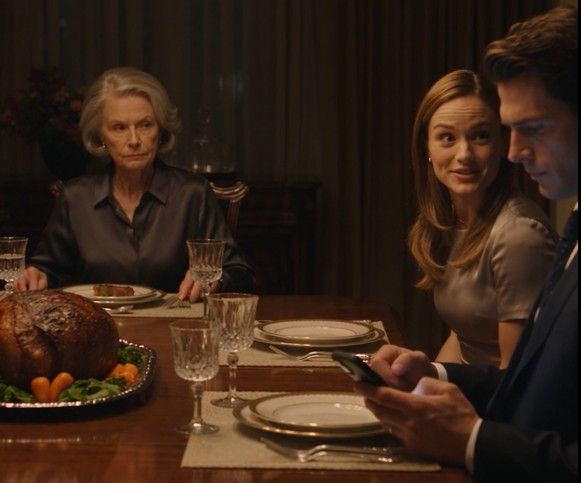
She did not answer.
Then he looked at me.
I had imagined that moment many times. I thought I would feel triumph. I thought I might want him to suffer under the weight of knowing I had uncovered everything.
Instead, I felt tired.
“You had thirty days,” I said quietly. “Arthur offered you time to tell the truth.”
Mark lowered his eyes.
That was the last thing I ever said to him.
Healing did not arrive like justice had, with paperwork and formal language. It came in small, almost embarrassing pieces.
Sarah moved into an apartment near me. She returned to work after taking leave. She started therapy. Some days she blamed herself for not seeing Mark clearly. Other days she was angry with Arthur for not telling her sooner.
I understood both.
One rainy afternoon, nearly six months after the sentencing, we opened the black leather folder again.
Not for evidence.
For Arthur.
The criminal case was over, and my attorney had returned the personal materials no longer needed. Tucked behind the final divider was a thin envelope I had somehow never noticed because it had been pressed flat against the backing.
SARAH, Arthur had written across the front.
Her hands began to shake.
Inside was a single page dated four days before his death.
He had written that he was sorry he had not told her about Mark immediately. He had wanted proof before asking her to choose between her husband and her father. He wrote that Mark had claimed she knew about the transfers, but that he did not believe it for one second.
Then came the line that broke her open.
You have always had a generous heart. If someone used that generosity against you, the shame belongs to them, not you.
Sarah pressed the paper to her chest and cried against my shoulder the way she had when she was a little girl.
I cried too.
That letter became the beautiful truth hidden inside the ugliest folder I had ever owned.
The house was never sold.
For a long time, I thought keeping it meant refusing to move forward. Then I realized the opposite. Mark had looked at my home and seen collateral. Sarah had once looked at it and seen a problem to solve. Arthur had filled it with books, old coats, arguments, dinners, ordinary mornings, and thirty-five years of living.
I began changing it carefully.
I boxed some of Arthur’s clothes and donated them. I kept his wool coat. I moved his reading glasses from the side table into the desk drawer instead of leaving them exactly where he had last set them. I repainted the guest room Sarah had slept in after leaving Mark.
The following spring, she helped me plant two dogwood trees near the back fence.
One Sunday evening, almost a year after that terrible dinner, Sarah arrived carrying roast beef and a loaf of bread.
“No financial advice tonight,” she said as she set the dishes down.
