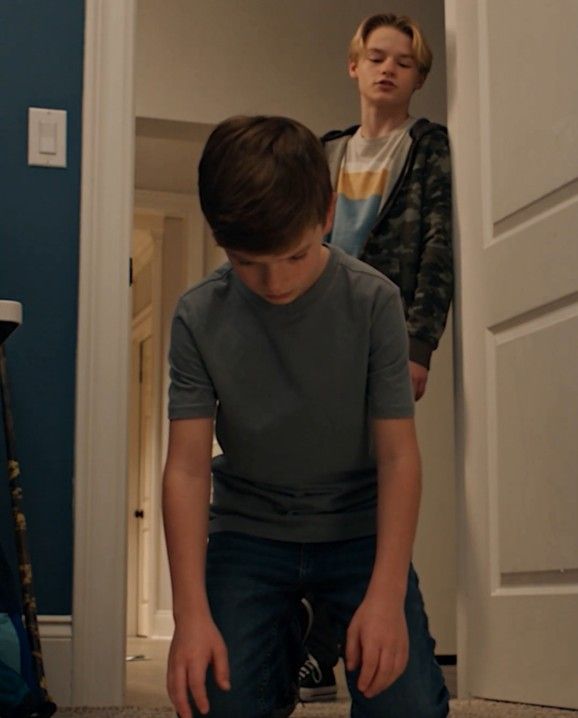
Milo kept shading the station floor. “Maybe.”
Jake swallowed. “I found something else.”
Milo’s pencil stopped.
Jake placed a small envelope on the floor outside the room. Inside were two pieces of the portrait of Milo’s mother that everyone thought were missing. Jake had tucked them into a book after ripping the sketchbook and forgotten where he put them.
“I am sorry,” Jake said.
Milo stared at the envelope. “For which part?”
Jake’s eyes lowered. “All of it. But I know saying that does not fix all of it.”
That was better than the apology Milo had imagined. Not because it erased anything, but because Jake did not ask to be forgiven.
“Okay,” Milo said.
Jake waited. “Okay what?”
“Okay, I heard you.”
Jake nodded and left.
The adoption process continued. There were visits, forms, questions, and one long meeting where Milo was asked what he wanted. The worker made clear that the answer belonged to him.
Milo looked at Sarah and David, then at the folder in front of him.
“I want to stay,” he said.
The worker smiled. “As a foster placement?”
Milo almost laughed at the phrase that had caused so much damage. “No. Not like that.”
Jake began counseling on his own and family sessions with Sarah and David. For several weeks he resented it. Then, slowly, the sentences changed. He admitted that every new meeting about Milo had felt like evidence that there was less room for him. He admitted he had heard friends call foster children “temporary” and had repeated the word because it gave him power over a change he could not control.
Sarah did not forgive the behavior for him. She made space for the fear beneath it without confusing fear with innocence.
At home, new rules appeared. Bedroom doors were private. Nobody entered without permission. Nobody touched another person’s belongings. Problems were brought to adults before they became punishments invented by children. Jake had to replace Milo’s art supplies from money he had saved for a new gaming headset. He hated that consequence. He also accepted it.
Before the art show, the family had one of the hardest counseling sessions they would ever have. The therapist placed four blank cards on the table and asked each person to write one sentence they had been afraid to say. Milo stared at his card for several minutes. Sarah wrote quickly. David crossed something out twice. Jake turned his card over as if hiding the paper could make the question disappear.
When they read them, Sarah’s said: I am afraid Milo will think our mistakes mean our love is temporary. David’s said: I am afraid I failed both boys by assuming silence meant peace. Jake’s said: I am afraid there is only room for one son who needs you.
Milo’s card said: I am afraid if I need too much, you will send me away.
Nobody tried to answer immediately. The therapist asked them to notice what the sentences had in common. They were all about losing a place in the family. The difference was what each person had done with that fear. Milo had made himself smaller. Jake had tried to make Milo smaller. Sarah and David had protected information instead of trusting the boys with age-appropriate truth.
That did not make the actions equal, and the therapist said so. Jake was responsible for what he had destroyed. But the family also had to change the system that had allowed two frightened children to live under the same roof without language for what they feared.
Afterward, David drove them home without the radio. At a red light, Jake said, “I thought if I admitted I was jealous, you would think I was a terrible person.”
Sarah answered from the front seat. “Feeling jealous would not have made you terrible. Hurting someone because you were jealous is what we have to deal with.”
Milo watched the city pass his window. For years adults had offered him simple stories: good homes, bad homes, good kids, difficult kids. This family was becoming harder to describe, which strangely made it feel more real. People could love him and still make mistakes. Jake could harm him and still be expected to change. Milo could be angry and still choose to stay.
A week later Jake asked if Milo wanted the bedroom lock changed. The old lock worked, but Jake knew how to open it with a coin. David had already offered to replace it. Milo had refused because he did not want his room to feel like a bunker.
“Maybe just the doorknob,” Milo said.
