The first morning, I drove her because her car was still being repaired after sitting unused for months.
At the entrance, she turned to me.
“You don’t have to walk me in.”
“I know.”
“I mean it.”
I put the car in park.
“Then I’ll stay here.”
She opened the door, took three steps, then came back and leaned through the window.
“Thanks.”
“For what?”
“For listening when I finally said it.”
I wanted to tell her I should have listened sooner.
Instead, I said, “Always.”
Therapy was harder than the court case.
Emily hated being asked what she felt because Caleb had trained her to treat feelings as evidence against herself. She could explain his behavior in perfect detail and still struggle to say she was angry.
When she finally did, she cried afterward as if anger itself were dangerous.
Madison came back slowly too.
She did not demand an apology for the months Emily disappeared. She brought coffee, sat on the porch, and complained about a dating app until Emily laughed.
One evening, Emily admitted Caleb had made her block Madison after accusing them of “feeding each other bad ideas.”
Madison rolled her eyes. “My bad idea was that you should have your own bank account.”
Emily laughed again.
Then she cried.
Healing rarely respected categories.
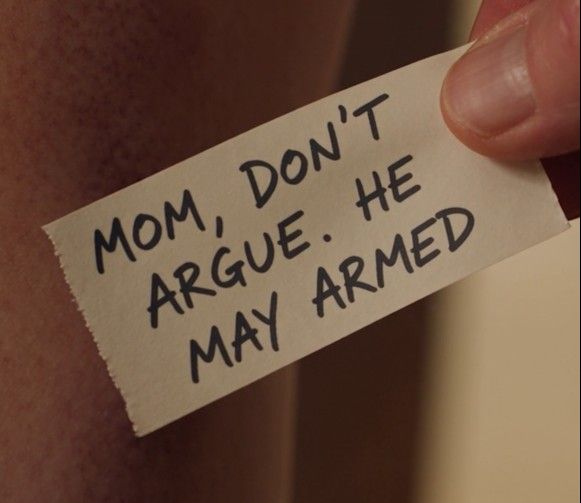
Three months after the arrest, I found the eyeliner note in the envelope where the advocate had returned it after copying the evidence.
The black letters had smudged slightly.
Mom, don’t argue. He may be armed.
I asked Emily whether she wanted it.
She stared at the paper.
“Throw it away.”
“Are you sure?”
