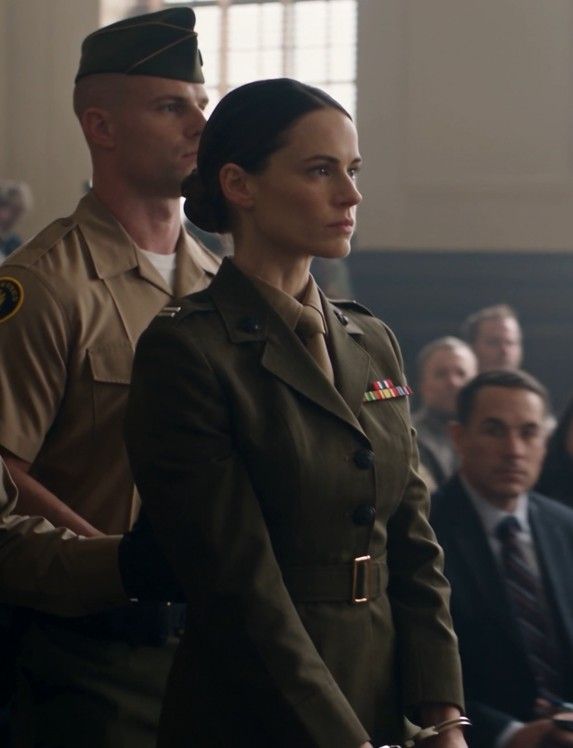
Then again.
“Why did you let me hate you?”
Claire took it.
“Because the operation was classified and because I thought protecting it was still my duty.”
“More important than us?”
“No.”
Claire’s voice broke.
“I know that now.”
Sarah folded against her.
Claire held the woman whose husband she could not bring home.
There was no clean forgiveness in that embrace.
Only grief finally pointed in the right direction.
The forensic review took four weeks.
It confirmed the drive was authentic and had not been altered after the night of the attack. Investigators recovered matching fragments from a backup server that had been marked for routine destruction. The digital certificate on the suppression order belonged to Richard’s command credentials.
Claire’s charges were dismissed with prejudice.
The service formally corrected the record to state that she had requested reinforcement, refused voluntary extraction, and was physically removed under a compartmented operational directive.
Miller, Hayes, and Jenkins were posthumously recognized for holding the checkpoint during the evacuation and for protecting fellow soldiers under fire.
Claire attended all three family ceremonies.
She did not stand at the podium.
She sat with the families.
Richard’s case moved separately through military justice and administrative review. Investigators found he had approved removal of the forty-five-second segment from the evidentiary package by labeling it nonresponsive compartmented material. He had then allowed prosecutors to proceed using the shortened footage while denying direct contact with Claire.
His defenders argued that the original operation had been lawful and that secrecy had protected a critical intelligence source.
That argument did not answer the perjury.
It did not answer the manipulated evidentiary record.
And it did not answer why he let his daughter face life imprisonment for conduct he had ordered.
Richard was relieved of command, reduced through administrative action after judicial proceedings, and ultimately left service in disgrace. The final judgment against him did not claim every operational decision had been criminal. It focused on the choices that followed: concealment, false testimony, and using a subordinate as a shield for his reputation.
Claire did not attend his final hearing.
Reynolds did.
When he returned, he found her at the Checkpoint Echo memorial.
“He asked whether you came.”
