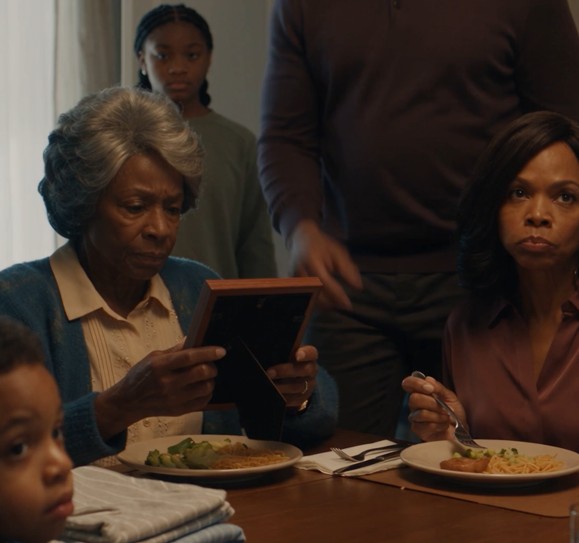
“You know I wouldn’t really have—”
“You told me to leave. You kept your father’s picture. You had already tried to take my money.”
He looked away.
She waited.
At last he said, “I thought you’d calm down and sign.”
The simplicity of it emptied the room.
Not a moment’s temper. Not a terrible sentence that had escaped before thought could catch it.
A method.
Marion stood.
“I love the child I raised,” she said. “You are responsible for the man sitting here.”
He called after her, but she let the door close.
Daniel pleaded guilty after his lawyer reviewed the evidence with him. He received a prison sentence, restitution orders, and restrictions against contacting Marion. The convictions remained on his record. The house was sold to settle debts, and Claire completed the divorce.
No restored family dinner erased any of it.
At sentencing, Marion read a statement from one sheet of paper.
“I gave my son help because I loved him. He used that love as a way into my accounts and out of his responsibilities. I want my grandchildren to know that asking for protection is not cruelty.”
Her voice shook only on the word grandchildren.
She finished anyway.
In the courthouse corridor afterward, Sophie leaned against the wall and slid slowly down until she was sitting on the floor.
Marion sat beside her despite her knees.
“I thought I’d feel happy,” Sophie whispered.
“I know.”
“I still want my dad.”
Marion took her hand.
“You’re allowed.”
For a while they watched shoes pass on the polished floor.
Then Sophie laid her head against Marion’s shoulder, and neither of them tried to make the feeling simpler.
Counseling gave Sophie words for things she had previously called being difficult. She learned to leave her phone in another room without feeling responsible for recording every dangerous silence.
Claire found bookkeeping work and rented a modest place near her sister. She attended every appointment required of her and others no court had ordered.
Trust returned in small pieces: a bill shown without prompting, a promise kept, an apology that ended before it became an excuse.
Ruth, who had spent years insisting she preferred quiet, acquired a regular Sunday dinner invitation and complained whenever anyone suggested she bring food.
Marion began sleeping through the night.
One afternoon, several months after the sentencing, the woman who had bought the cottage telephoned.
Her name was Leah Bennett. Marion remembered little about the sale except paperwork and Leah asking whether the bookshelves could stay.
“I’ve been trying to find the right time,” Leah said. “There’s something I would like you to see.”
Marion almost refused.
Then Leah added, “Ruth can come. And the children, if you’d like.”
The cottage stood beneath the same maple, its porch newly painted. Marion stopped at the gate. Her body remembered the path before she could decide whether to walk it.
Through the front window, she saw books.
Hundreds of them.
Low shelves filled the room where her sofa had stood. Small tables occupied the corner where winter sunlight used to warm her husband’s feet.
