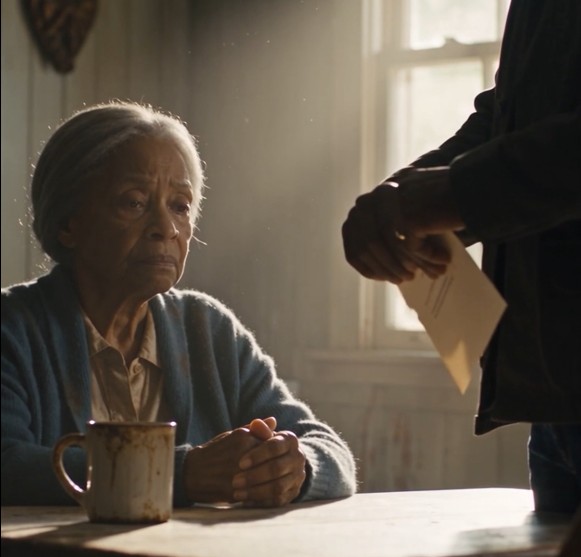
He cried then, without asking her to comfort him. She let him.
After a while, she passed him a clean handkerchief from the open drawer.
“I won’t be your lender,” she said. “And I won’t have every visit turn into a discussion about what I own.”
“I understand.”
“I don’t know when I’ll stop remembering that sound.”
He looked at the envelope.
“The letter?”
She nodded.
He wiped his face.
“I wish I could take it back.”
“So do I.”
They sat with that until the room cooled and there was work left to do.
At the bungalow, Ruth arrived with soup and a loaf of bread. She had known Evelyn long enough to know that on difficult days she forgot to eat.
Her son set three places at the old table.
Ruth hesitated in the doorway, holding her coat.
“Stay,” Evelyn told her.
During supper, he thanked Ruth for helping his mother. He didn’t add an excuse or a joke.
Ruth met his eyes.
“She knew what she needed. I helped her put it in writing.”
For the first time, he seemed to hear the distinction.
Spring came slowly.
Evelyn learned the sounds of her new house: the gentle click of the heater, rain against the kitchen vent, the neighbor’s gate at seven each morning.
She joined the library’s Thursday reading group. She paid someone to clear the walk. When the furnace needed servicing, she made the appointment without wondering which bill she would postpone.
Her son visited when invited.
Sometimes they talked easily. Sometimes something ordinary brought the kitchen confrontation back so sharply that Evelyn grew quiet.
He learned to let her be quiet.
One afternoon, he offered to bring groceries, and she stiffened before she could help it.
“I’m not checking whether you can manage,” he said. “I’m going to the store.”
She studied him.
“Coffee,” she said finally. “The kind I buy.”
He brought the right one.
Trust returned in details too small to announce.
He called without mentioning money. He canceled a visit once because of an extra shift, then offered another day instead of expecting her to wait indefinitely.
By summer, his repayment balances were shrinking.
He showed her once, not to ask for praise but because he had promised to stop hiding.
“That looks like work,” she said.
“It is.”
“Good.”
In August, he asked whether he could come for her birthday and cook.
“You always burn rice.”
