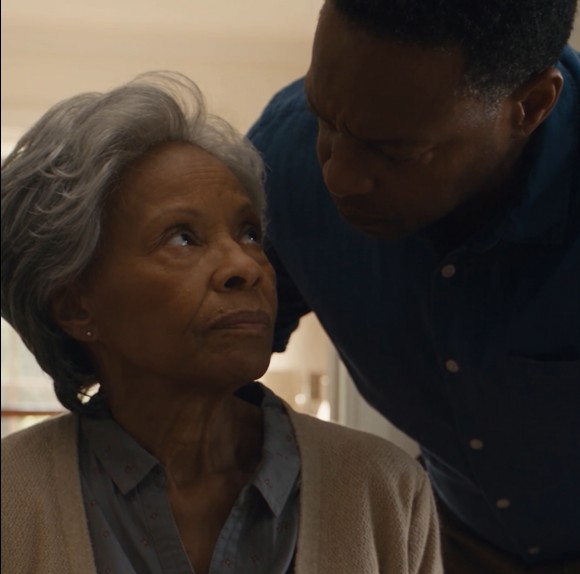
For the first time that day, she cried.
Lisa sat on the floor nearby. She did not reach for her until Evelyn held out a hand.
The following weeks demanded a different kind of courage.
Evelyn gave a statement beneath fluorescent lights while a detective asked when Daniel had last had legitimate access to her accounts. She explained the old authorization she had once given him to deposit a check, and how it had ended years before.
She brought twelve years of records.
She marked the gifts as gifts.
“I won’t call money stolen because I regret giving it,” she told the detective. “But this transfer was not a gift.”
The distinction mattered to her. Even now, especially now, she would not let grief make her careless with the truth.
The investigation found that Daniel had used information stored on her home computer to reset her banking credentials. His messages to Ruth, the lender’s records, and the destination account documented the plan.
The petition was real.
So was the forged statement.
When Miriam obtained the complete filing, she found a supposed medical letter as well. The physician whose name appeared on it confirmed that he had neither written it nor examined Evelyn.
Daniel had constructed an illness out of paperwork.
An independent clinician evaluated her. Evelyn disliked the tests, disliked proving her own mind to strangers, but she answered carefully and took breaks when she needed them.
At the hearing, the judge dismissed Daniel’s petition.
Evelyn listened without triumph.
Beside her, Lisa folded and unfolded a tissue until it tore.
Outside the courthouse, Daniel waited near the steps with his lawyer.
“Mama.”
Miriam stopped beside Evelyn.
Daniel looked thinner.
“Can we talk alone?”
“No,” Evelyn said.
His eyes moved to Lisa, then back.
“You’ve got what you wanted. Your accounts. Your house. Can’t you tell them to stop?”
A bus sighed at the curb. People walked around them carrying coffees and folders, living inside other mornings.
“I wanted my son to tell the truth.”
“I said I was sorry.”
“You said you could fix it.”
He stared at the pavement.
She waited long enough for him to speak.
When he did not, she walked down the steps.
The criminal case took months.
Daniel’s lawyer challenged records, negotiated, and eventually brought him to court to plead guilty to the theft and the forged filings. The proof did not depend on Evelyn remembering one frightening conversation.
It lived in bank logs, copied signatures, messages, and documents he had submitted himself.
The frozen money was returned to Evelyn after the banks completed their review. Daniel’s legitimate debts remained his.
At sentencing, Evelyn read from a single sheet.
“I loved my son before he earned anything,” she said. “He did not need to take my freedom to remain my son.”
She steadied the paper.
“But I will not spend the rest of my life proving that loving him requires being available for harm.”
