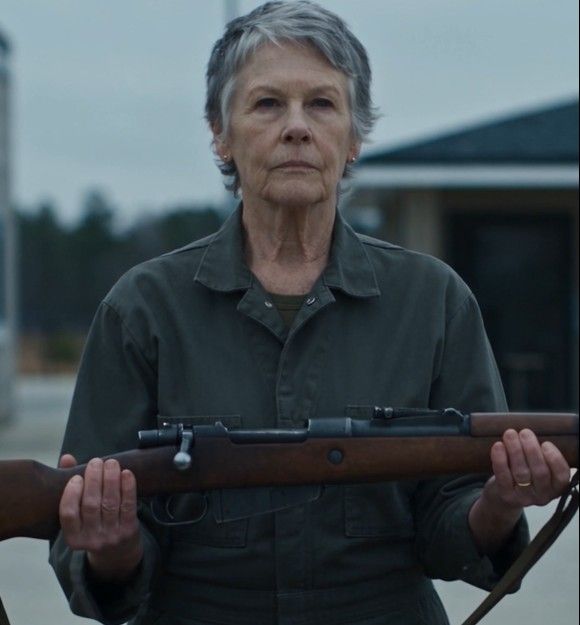
“I know.”
That answer made her listen.
He told her supervised retraining had been worse than he expected because no one cared about his reputation. Every decision had to be explained. Every change had to be documented. He had been paired with an instructor ten years younger who asked him to justify procedures he used to issue as commands.
“Turns out I hated being questioned because I had stopped questioning myself.”
Evelyn looked toward the target line.
“That can happen quietly.”
Mason nodded.
“I was wrong about you before you opened the case.”
“Yes.”
“I was wrong after you made the shot too. I wanted the machine to be broken because the alternative was admitting I had built a test to prove something that was never true.”
“Yes.”
He almost smiled. “You do not make apologies easy.”
“They are not supposed to be performance events.”
This time he did smile.
He handed her the notebook.
Inside were written apologies to the range operator and two trainees he had embarrassed during prior sessions. Evelyn closed it.
“Why show me?”
“Because I wanted you to know the consequence did not stop at losing the range.”
She gave it back.
“Good. Keep going.”
The weekend seminar became an annual visit.
Evelyn taught less about marksmanship than the trainees expected. She taught observation. She made them stand without rifles and describe the range from near to far. She asked them to explain what changed, what remained, and what they only assumed.
Lena became one of her best students.
Mason eventually returned to instructional duty, but not as lead instructor. His return came with a condition he had requested himself: another instructor reviewed any major training change before execution.
Some people saw that as a limitation.
He called it a guardrail.
Between those visits, the range itself changed in ways small enough that outsiders would not notice. Instructors began writing the planned environmental settings on the board before a demonstration instead of adjusting them casually after a shooter arrived. Trainees were encouraged to ask why a condition changed. The control operator logged every manual override with the name of the person who ordered it.
Mercer called the revisions procedural improvements.
Evelyn knew better.
They were really habits designed to prevent pride from hiding inside flexibility.
