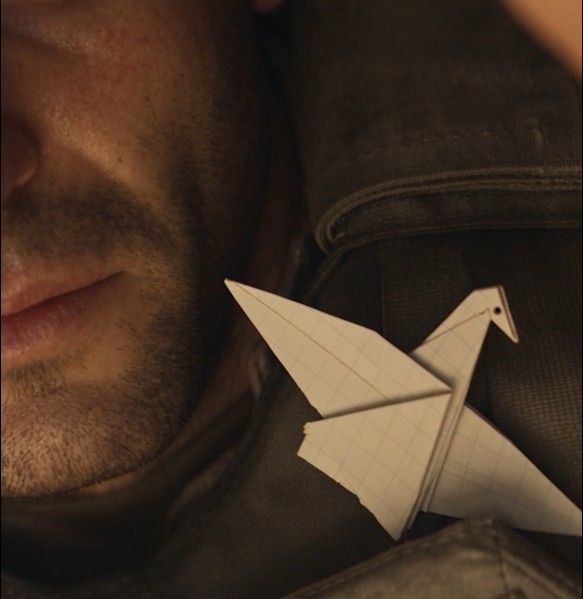
His first attempt looked like damaged machinery.
The second had wings.
He left it on Mason’s bedside table when he visited during rehabilitation.
Mason stared at it.
“What is that?”
“A bird.”
“No, it isn’t.”
“My sister says it is.”
Mason picked it up. “Your sister is lying to protect you.”
They laughed.
Leah’s own processing was quieter.
She had made the decision to help quickly. People later praised her for it in ways that made her uncomfortable. The praise flattened the moment, turning it into proof that she had been morally certain when she had not been.
She remembered the anger she had felt earlier that day. She remembered wishing for simple enemies. She remembered seeing the paper bird and thinking of her niece.
That connection had mattered.
It also troubled her.
What if there had been no paper bird? What if the man had carried nothing that reminded her of someone she loved? Would she have kept her hand open with the same steadiness?
She asked herself that question because she did not want compassion to depend on resemblance.
During a later training discussion, Leah described the incident without identifying details. She did not make the paper bird the reason the wounded man deserved treatment.
“The bird helped me see him,” she said. “But he did not need to remind me of my family to be wounded and in our control. That’s the part I don’t want to forget.”
One of the younger soldiers asked whether she had been afraid the man would attack them once they helped him.
“Yes.”
“Then how did you know what to do?”
Leah considered the question.
“Knowing the rule is not the same as feeling calm about it.”
She talked about security, medical priorities, team responsibilities, and the need to remain alert without using alertness as an excuse to deny care. She made the lesson practical because practical ethics were more useful than heroic stories.
Colin sat in the back and said nothing.
Afterward he waited until the room emptied.
“You left out the part where I told you to leave him.”
“It wasn’t a story about embarrassing you.”
“You could have said someone objected.”
