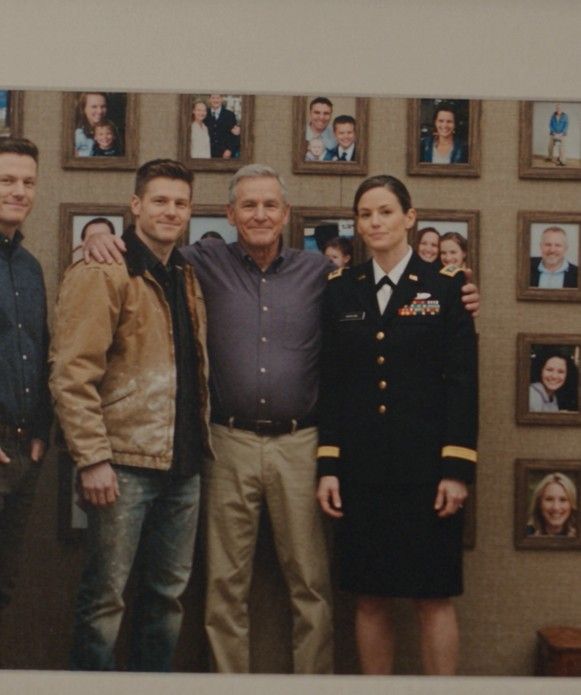
Her father stood for the photograph only after her brother moved into it. The officer being promoted remained beside the empty chair, holding the small box he had refused to take.
Captain Audrey Quinn had asked her father to help mark the occasion at the family gathering afterward. He said the formal ceremony was enough and complained that people made too much of ordinary career steps now.
Her brother, former Sergeant Ben Quinn, came late from his construction job. Their father brightened immediately, rising to shake his hand and tell everyone about the difficult work he had been doing.
Audrey loved her brother. That was what made the afternoon so difficult: none of this was something Ben had asked for, and resenting him felt like injuring the only person in the family who might understand.
For years, their father spoke about Ben’s service with a pride that filled whole conversations. When Audrey joined, he asked whether she planned to stay long enough to make settling down difficult.
She told herself he worried because she was his daughter. It was easier than naming the difference every time it appeared.
Now her husband, Matt, stood beside a table of untouched sandwiches. He had heard Audrey rehearse asking her father again, stripping every trace of need from the request so rejection would look like scheduling.
“I’ll do it,” Matt said quietly. Audrey nodded, grateful and suddenly close to tears for a reason the little box couldn’t explain.
Ben noticed. He followed her gaze toward their father, who was asking a guest to take another photograph of the two of them.
“Audrey should be in this,” Ben said. Their father waved her over as though remembering someone who happened to be nearby.
She joined them because refusing would become the story. In the photograph, her father rested a hand on Ben’s shoulder and left the space beside Audrey untouched.
Afterward, Ben found her in the kitchen putting cups into a cupboard. She had always cleaned when she wanted permission to leave a conversation without appearing to run from it.
“What did he say?” Ben asked. Audrey answered that it wasn’t important, then hated the sentence for arriving in her voice so easily.
Ben waited. She told him about the box, the request, and the way she had begun feeling foolish for wanting her own father to look proud of her.
“I don’t need him to be less proud of you,” she said. Ben lowered his eyes.
He had benefited from the difference. He hadn’t created it, but he remembered changing the subject instead of challenging their father when the praise became a comparison.
Outside, somebody called for the family toast. Ben picked up the box from the counter and asked whether Audrey still wanted their father involved.
She didn’t know. Wanting an apology after asking for one twice felt different from the uncomplicated pride she imagined receiving without effort.
They returned to the room together. Their father raised a glass and began with a story about Ben coming home, apparently intending to connect it to Audrey’s day later.
Ben set his own glass down. The sound was small, but his father stopped.
“This isn’t my story,” Ben said. Audrey looked at him, then at the box still in his hand.
He placed it on the table in front of their father. For the first time that afternoon, nobody helped the older man move past the silence as Audrey waited to hear whether he could speak about her without beginning with her brother. 👇
Audrey’s father looked at the small box as if Ben had set down something dangerous.
No one in the room spoke.
Ben stayed beside his sister, not in front of her. That mattered. Audrey could feel every relative and family friend waiting for someone to soften the moment into a joke.
Her father cleared his throat.
“I was getting to Audrey.”
Ben did not pick up his glass.
“Then start with her,” he said.
The older man’s face tightened.
