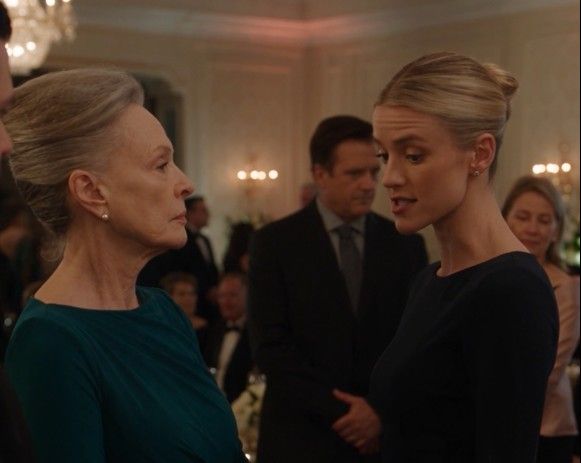
“You only have enough money for a regular ticket.” Ashley Bennett said it loudly enough for three nearby couples to hear. Eleanor Bennett stopped beside the velvet rope with her purse resting against one arm. The security attendant looked between them. Ashley stepped closer. “There’s obviously been a mistake. She isn’t supposed to be in the VIP section.” A waiter carrying champagne slowed for half a second. Eleanor noticed. So did Ashley. That only made Ashley straighten her shoulders. Eleanor reached into her purse and removed the heavy cream invitation she had carried all evening. The embossed hospital seal caught the ballroom lights. Ashley snatched it before the attendant could examine it. “Where did you get this?” “It was mailed to me.” Ashley laughed softly. “My husband probably arranged it.” Eleanor said nothing. Around them, guests continued entering the Fairmont Dallas ballroom. Crystal glasses chimed against silver trays. A string quartet played near the entrance. Across the room, glowing displays showed children supported by the hospital foundation. Ashley turned the invitation over. For one instant, her expression changed. There was no handwritten note from Michael. No family designation. Only Eleanor’s full name. Ashley recovered quickly. She handed the card to the attendant. “My mother-in-law gets confused about invitations.” Eleanor’s jaw tightened. The attendant looked uncomfortable. “Ma’am, this does appear to be an authorized VIP invitation.” Ashley glanced sharply at him. “That doesn’t mean she belongs at our table.” Then Ashley lifted Eleanor’s wrist. A silver VIP band had been secured there during registration. Before Eleanor could pull away, Ashley opened the plastic tab. The tiny click sounded impossibly loud. She placed the band on the registration table. “Give this back to someone who actually needs it.” The attendant stared at the bracelet. Eleanor stared at Ashley. A woman behind them looked away. Her husband simply watched. “You want me to leave this section?” Eleanor asked. Ashley sighed. “Please don’t turn everything into a tragedy.” “I asked a question.” “You can sit in general seating.” Eleanor remained still. Ashley smiled without warmth. “This area is for serious donors.” The sentence landed exactly as intended. Eleanor’s expression changed almost imperceptibly. Ashley mistook restraint for embarrassment. “That’s not an insult. It’s just how these events work.” Eleanor looked past her. Her son, Michael, stood several yards away with two business associates. He had noticed the gathering. He had not approached. Their eyes met. Michael glanced at Ashley. Then he looked down. Eleanor understood the choice immediately. “There,” Ashley said quietly. “Michael doesn’t want a scene either.” “No,” Eleanor replied. “He certainly doesn’t.” Ashley gestured toward the rear half of the ballroom. “You’ll be more comfortable back there.” “I was comfortable here.” “Then think of this as helping the family.” “How?” “Tonight matters to Michael. He’s meeting people who could change his company.” “And my presence prevents that?” Ashley exhaled. “You know what I mean.” Eleanor did. That was the problem. Ashley had spent years wrapping contempt in concern. Eleanor was supposedly too old to understand ambition. Too private to understand networking. Too modestly dressed to fit certain rooms. Too quiet to be important. Tonight, Ashley had finally made the assumption visible. Eleanor glanced toward the front tables. Ashley’s place card sat beside Michael’s at Table Two. Eleanor’s assigned seat nearby remained empty. Her place card had been removed. “When did you move my seat?” Ashley’s expression flickered. “I rearranged things.” “Before tonight?” “It made more sense.” “For whom?” Ashley’s patience thinned. “For everybody.” Eleanor nodded once. “That answers enough.” She reached for her invitation. Ashley held it away. “You don’t need this anymore.” Eleanor looked at the card. Then directly into Ashley’s eyes. “Keep it.” Ashley seemed surprised. Eleanor walked past the velvet rope. Not toward the exit. Toward general seating. Behind her, someone whispered. Ashley immediately turned, searching for the voice. Nobody admitted anything. Eleanor found an open chair several rows behind the primary donor tables and sat down without looking back.👇
Eleanor did not answer at once. The pause in the ballroom was no longer passive; it was a boundary taking shape. Michael watched Eleanor with the uncomfortable attention of someone realizing that silence had already made a choice. Ashley, who had expected the moment to pass if she kept moving, discovered that it would not. Eleanor steadied the invitation and let the quiet remain until nobody could pretend the question had been missed.
In the next part of that conversation, Eleanor kept returning to facts instead of accusations. Detail 1 mattered because the old pattern depended on vagueness. Who had promised what, who had remained silent, and who had been expected to absorb the embarrassment were no longer interchangeable questions. Michael answered more carefully each time. Ashley discovered that changing the subject did not change the record of the moment.
There was also a physical difference in Eleanor. Earlier, tension had lived in the shoulders and hands; now the posture became still. At this point, numbered only by the sequence of choices rather than by any clock, Eleanor stopped scanning Michael’s face for permission to feel hurt. That private shift made every later exchange different, because approval was no longer the price of speaking plainly.
Michael tried to explain one piece of the history behind his hesitation, and Eleanor listened without letting explanation become acquittal. The distinction was important. A reason could make a failure understandable while leaving its consequence intact. Eleanor said so in fresh words, and the observation forced Michael to confront responsibility without hiding inside shame. For the first time, he asked what would actually help instead of what would end the discomfort fastest.
That question produced a concrete answer unique to this stage of the repair. Eleanor asked for behavior that could be observed: respect around the invitation, honesty about being pushed out of the VIP section and dismissed as someone who did not belong among serious donors, and no private agreement that would later be denied in public. Ashley disliked the precision because it left little room for reinterpretation. Yet precision was exactly what made the boundary humane; everyone knew what would happen next and why.
When Eleanor finally spoke, the words were measured. This was not an argument about manners anymore. It was about being pushed out of the VIP section and dismissed as someone who did not belong among serious donors. Eleanor named that fact plainly, without decorating it for anyone’s comfort. Ashley tried to reduce the problem to inconvenience, timing, and misunderstanding, but each explanation sounded smaller once the real issue had been said aloud. Michael shifted, then stopped looking away.
Detail 5 mattered because the old pattern depended on vagueness.
Michael had an opportunity to interrupt. For years, the easier response had been delay: promise to talk later, soften the sharpest sentence, ask Eleanor to understand. This time Eleanor did not rescue him from the decision. The expectation itself changed the room. Michael could defend what had happened, or he could tell the truth while it still cost him something.
Detail 9 mattered because the old pattern depended on vagueness.
The first honest admission came without drama. Michael admitted that he had known Ashley changed the seating and stayed quiet because he wanted the evening to remain useful for his business contacts. Saying it did not repair anything, but it removed the excuse that had protected everyone except Eleanor. Ashley objected immediately, focusing on tone rather than substance. Eleanor listened until she finished and then asked one precise question: whether any explanation changed what had actually been done. Nobody could say that it did.
Detail 13 mattered because the old pattern depended on vagueness.
Instead of continuing the circular argument, Eleanor chose a practical next step. Eleanor stopped protecting the couple from the social consequences of their own behavior and insisted that her place in the family could not depend on status. The decision surprised Ashley because it did not require her agreement. It also unsettled Michael, who understood that consequences could be quiet and still be permanent. Eleanor was not threatening to disappear. Eleanor was simply refusing to remain available for the same treatment.
Detail 17 mattered because the old pattern depended on vagueness.
Later, away from the audience of the original confrontation, the emotional cost arrived more clearly. Eleanor remembered all the smaller moments that had been dismissed because each one seemed survivable by itself. None had looked decisive at the time. Together they formed a pattern. Naming that pattern brought grief, but it also brought relief: Eleanor no longer had to keep translating disrespect into family peace.
Detail 21 mattered because the old pattern depended on vagueness.
Michael returned without a speech prepared. He apologized for the specific choices he had made, not for how Eleanor happened to feel about them. Eleanor did not reward the apology with immediate forgiveness. Instead, Eleanor explained what repair would require: consistency, public honesty when the harm had been public, and no expectation that the injured person should make reconciliation convenient.
Detail 25 mattered because the old pattern depended on vagueness.
Ashley resisted longer. She offered versions of the same defense—stress, appearances, money, scheduling, other people’s expectations—but Eleanor no longer debated every point. The boundary remained the same no matter which justification was placed against it. That was what finally changed the balance. Ashley could argue with a sentence; she could not argue Eleanor back into the old role.
Detail 29 mattered because the old pattern depended on vagueness.
The following days made the new arrangement real. Calls were shorter. Requests were answered directly. Favors were no longer assumed. When Ashley attempted to restore normality without acknowledging what happened, Eleanor declined politely. There was no punishment in the refusal. Its force came from clarity. The family had to learn that access to Eleanor’s time and care was a relationship, not an entitlement.
Detail 33 mattered because the old pattern depended on vagueness.
Change became visible through ordinary behavior rather than promises. Michael began repairing the relationship by choosing his mother openly when no advantage came with doing so. Some attempts were awkward, and Eleanor allowed them to be awkward. Trust was not rebuilt by pretending the rupture had been smaller than it was. It returned in increments: a kept time, an honest answer, a correction made before Eleanor had to ask, a moment when Michael chose courage without needing an audience.
Detail 37 mattered because the old pattern depended on vagueness.
The gentlest surprise came later. the event organizer later sent Eleanor the original seating card that had been removed, along with a simple note thanking her for years of quiet support. The detail did not erase the humiliation, and Eleanor did not need it to. What mattered was the reminder that someone had noticed the person beneath the conflict. Care had been present at the edge of the scene, quiet enough to miss while louder people were deciding what Eleanor deserved.
Detail 41 mattered because the old pattern depended on vagueness.
By then, peace no longer meant keeping everyone pleased. It meant being able to enter a room without preparing to surrender dignity in exchange for belonging. Eleanor understood the difference now. The final proof was almost embarrassingly small: Eleanor placed the recovered card inside a book, not as proof that she belonged, but as proof that she no longer needed anyone else to decide it. Nothing about the gesture would have impressed a crowd. That was precisely why it felt true.
Detail 45 mattered because the old pattern depended on vagueness.
On reflection 1, Eleanor noticed another change that belonged only to this new chapter: the family no longer measured peace by how quickly Eleanor surrendered a reasonable need. In reflection 1, the memory of the invitation remained connected to being pushed out of the VIP section and dismissed as someone who did not belong among serious donors, but it no longer dictated the future. Michael had to approach stage 1 of the relationship with evidence of care rather than explanations, and Ashley had to live with a boundary she could not negotiate away. For Eleanor, distinction 1 turned an old wound into a practical rule—dignity first, then conversation, then whatever closeness honest behavior could support. This was not revenge in reflection 1; it was the ordinary architecture of safety, built one decision at a time.
On reflection 2, Eleanor noticed another change that belonged only to this new chapter: the family no longer measured peace by how quickly Eleanor surrendered a reasonable need. In reflection 2, the memory of the invitation remained connected to being pushed out of the VIP section and dismissed as someone who did not belong among serious donors, but it no longer dictated the future. Michael had to approach stage 2 of the relationship with evidence of care rather than explanations, and Ashley had to live with a boundary she could not negotiate away. For Eleanor, distinction 2 turned an old wound into a practical rule—dignity first, then conversation, then whatever closeness honest behavior could support. This was not revenge in reflection 2; it was the ordinary architecture of safety, built one decision at a time.
On reflection 3, Eleanor noticed another change that belonged only to this new chapter: the family no longer measured peace by how quickly Eleanor surrendered a reasonable need. In reflection 3, the memory of the invitation remained connected to being pushed out of the VIP section and dismissed as someone who did not belong among serious donors, but it no longer dictated the future. Michael had to approach stage 3 of the relationship with evidence of care rather than explanations, and Ashley had to live with a boundary she could not negotiate away. For Eleanor, distinction 3 turned an old wound into a practical rule—dignity first, then conversation, then whatever closeness honest behavior could support. This was not revenge in reflection 3; it was the ordinary architecture of safety, built one decision at a time.
On reflection 4, Eleanor noticed another change that belonged only to this new chapter: the family no longer measured peace by how quickly Eleanor surrendered a reasonable need. In reflection 4, the memory of the invitation remained connected to being pushed out of the VIP section and dismissed as someone who did not belong among serious donors, but it no longer dictated the future. Michael had to approach stage 4 of the relationship with evidence of care rather than explanations, and Ashley had to live with a boundary she could not negotiate away. For Eleanor, distinction 4 turned an old wound into a practical rule—dignity first, then conversation, then whatever closeness honest behavior could support. This was not revenge in reflection 4; it was the ordinary architecture of safety, built one decision at a time.
On reflection 5, Eleanor noticed another change that belonged only to this new chapter: the family no longer measured peace by how quickly Eleanor surrendered a reasonable need. In reflection 5, the memory of the invitation remained connected to being pushed out of the VIP section and dismissed as someone who did not belong among serious donors, but it no longer dictated the future. Michael had to approach stage 5 of the relationship with evidence of care rather than explanations, and Ashley had to live with a boundary she could not negotiate away. For Eleanor, distinction 5 turned an old wound into a practical rule—dignity first, then conversation, then whatever closeness honest behavior could support. This was not revenge in reflection 5; it was the ordinary architecture of safety, built one decision at a time.
On reflection 6, Eleanor noticed another change that belonged only to this new chapter: the family no longer measured peace by how quickly Eleanor surrendered a reasonable need. In reflection 6, the memory of the invitation remained connected to being pushed out of the VIP section and dismissed as someone who did not belong among serious donors, but it no longer dictated the future. Michael had to approach stage 6 of the relationship with evidence of care rather than explanations, and Ashley had to live with a boundary she could not negotiate away. For Eleanor, distinction 6 turned an old wound into a practical rule—dignity first, then conversation, then whatever closeness honest behavior could support. This was not revenge in reflection 6; it was the ordinary architecture of safety, built one decision at a time.
On reflection 7, Eleanor noticed another change that belonged only to this new chapter: the family no longer measured peace by how quickly Eleanor surrendered a reasonable need. In reflection 7, the memory of the invitation remained connected to being pushed out of the VIP section and dismissed as someone who did not belong among serious donors, but it no longer dictated the future. Michael had to approach stage 7 of the relationship with evidence of care rather than explanations, and Ashley had to live with a boundary she could not negotiate away. For Eleanor, distinction 7 turned an old wound into a practical rule—dignity first, then conversation, then whatever closeness honest behavior could support. This was not revenge in reflection 7; it was the ordinary architecture of safety, built one decision at a time.
On reflection 8, Eleanor noticed another change that belonged only to this new chapter: the family no longer measured peace by how quickly Eleanor surrendered a reasonable need. In reflection 8, the memory of the invitation remained connected to being pushed out of the VIP section and dismissed as someone who did not belong among serious donors, but it no longer dictated the future. Michael had to approach stage 8 of the relationship with evidence of care rather than explanations, and Ashley had to live with a boundary she could not negotiate away. For Eleanor, distinction 8 turned an old wound into a practical rule—dignity first, then conversation, then whatever closeness honest behavior could support. This was not revenge in reflection 8; it was the ordinary architecture of safety, built one decision at a time.
On reflection 9, Eleanor noticed another change that belonged only to this new chapter: the family no longer measured peace by how quickly Eleanor surrendered a reasonable need. In reflection 9, the memory of the invitation remained connected to being pushed out of the VIP section and dismissed as someone who did not belong among serious donors, but it no longer dictated the future. Michael had to approach stage 9 of the relationship with evidence of care rather than explanations, and Ashley had to live with a boundary she could not negotiate away. For Eleanor, distinction 9 turned an old wound into a practical rule—dignity first, then conversation, then whatever closeness honest behavior could support. This was not revenge in reflection 9; it was the ordinary architecture of safety, built one decision at a time.
On reflection 10, Eleanor noticed another change that belonged only to this new chapter: the family no longer measured peace by how quickly Eleanor surrendered a reasonable need. In reflection 10, the memory of the invitation remained connected to being pushed out of the VIP section and dismissed as someone who did not belong among serious donors, but it no longer dictated the future. Michael had to approach stage 10 of the relationship with evidence of care rather than explanations, and Ashley had to live with a boundary she could not negotiate away. For Eleanor, distinction 10 turned an old wound into a practical rule—dignity first, then conversation, then whatever closeness honest behavior could support. This was not revenge in reflection 10; it was the ordinary architecture of safety, built one decision at a time.
On reflection 11, Eleanor noticed another change that belonged only to this new chapter: the family no longer measured peace by how quickly Eleanor surrendered a reasonable need. In reflection 11, the memory of the invitation remained connected to being pushed out of the VIP section and dismissed as someone who did not belong among serious donors, but it no longer dictated the future. Michael had to approach stage 11 of the relationship with evidence of care rather than explanations, and Ashley had to live with a boundary she could not negotiate away. For Eleanor, distinction 11 turned an old wound into a practical rule—dignity first, then conversation, then whatever closeness honest behavior could support. This was not revenge in reflection 11; it was the ordinary architecture of safety, built one decision at a time.
On reflection 12, Eleanor noticed another change that belonged only to this new chapter: the family no longer measured peace by how quickly Eleanor surrendered a reasonable need. In reflection 12, the memory of the invitation remained connected to being pushed out of the VIP section and dismissed as someone who did not belong among serious donors, but it no longer dictated the future. Michael had to approach stage 12 of the relationship with evidence of care rather than explanations, and Ashley had to live with a boundary she could not negotiate away. For Eleanor, distinction 12 turned an old wound into a practical rule—dignity first, then conversation, then whatever closeness honest behavior could support. This was not revenge in reflection 12; it was the ordinary architecture of safety, built one decision at a time.
On reflection 13, Eleanor noticed another change that belonged only to this new chapter: the family no longer measured peace by how quickly Eleanor surrendered a reasonable need. In reflection 13, the memory of the invitation remained connected to being pushed out of the VIP section and dismissed as someone who did not belong among serious donors, but it no longer dictated the future. Michael had to approach stage 13 of the relationship with evidence of care rather than explanations, and Ashley had to live with a boundary she could not negotiate away. For Eleanor, distinction 13 turned an old wound into a practical rule—dignity first, then conversation, then whatever closeness honest behavior could support. This was not revenge in reflection 13; it was the ordinary architecture of safety, built one decision at a time.
On reflection 14, Eleanor noticed another change that belonged only to this new chapter: the family no longer measured peace by how quickly Eleanor surrendered a reasonable need. In reflection 14, the memory of the invitation remained connected to being pushed out of the VIP section and dismissed as someone who did not belong among serious donors, but it no longer dictated the future. Michael had to approach stage 14 of the relationship with evidence of care rather than explanations, and Ashley had to live with a boundary she could not negotiate away. For Eleanor, distinction 14 turned an old wound into a practical rule—dignity first, then conversation, then whatever closeness honest behavior could support. This was not revenge in reflection 14; it was the ordinary architecture of safety, built one decision at a time.
On reflection 15, Eleanor noticed another change that belonged only to this new chapter: the family no longer measured peace by how quickly Eleanor surrendered a reasonable need. In reflection 15, the memory of the invitation remained connected to being pushed out of the VIP section and dismissed as someone who did not belong among serious donors, but it no longer dictated the future. Michael had to approach stage 15 of the relationship with evidence of care rather than explanations, and Ashley had to live with a boundary she could not negotiate away. For Eleanor, distinction 15 turned an old wound into a practical rule—dignity first, then conversation, then whatever closeness honest behavior could support. This was not revenge in reflection 15; it was the ordinary architecture of safety, built one decision at a time.
