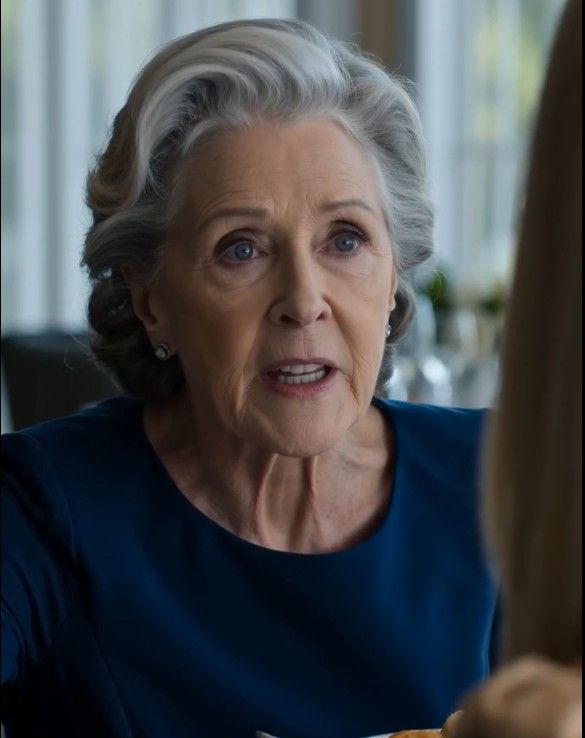
My relationship with Lucas needed a different kind of repair. He started visiting on Sunday afternoons, but he called first and accepted no if I needed rest. He brought groceries once and asked which brands I actually used. When we cooked, he washed the dishes while I sat at the kitchen table. Sometimes we spoke about legal documents. More often we talked about ordinary things that had vanished between us: the weather, books, the peculiar way his father used to whistle when he couldn’t find his keys.
One Sunday I took the fountain pen from my drawer. I had kept it boxed since the birthday dinner. I told Lucas what it was and how his father had used it to grade the essays of students who believed no one expected much from them.
“I was going to give this to you that night,” I said.
Lucas held the unopened box. “I don’t deserve it.”
“It isn’t a reward. It’s a reminder that words can be trusted only when the person writing them means them.”
He opened the box and examined the worn barrel. He did not try to turn the moment into instant forgiveness. He put the pen back in its case and asked whether I would show him how to refill it later.
Claire helped me establish a modest, fully funded annual book award through the nonprofit, with no guarantee beyond the amount already deposited. I insisted on reviewing the agreement with Grace, and a trustee confirmed the transfer only after the money arrived in the proper charitable account. We published straightforward selection criteria and asked school counselors to nominate students who loved learning but needed help paying for books, fees, or supplies.
I expected the first gathering to be small. It was held in my husband’s old school library on an April afternoon, with folding chairs and paper cups of lemonade. As I arrived, Claire introduced me to a retired teacher named Evelyn Marsh. Evelyn had taught beside my husband for years and was carrying a faded cardboard file tied with green ribbon.
“Your husband asked me to keep this,” she said. “I didn’t think the right moment would ever come.”
Inside were copies of notes he’d received from former students, many written years after graduation. One thanked him for buying a dictionary when her family couldn’t afford one. Another described the bus pass he’d slipped into an envelope so a boy could continue attending evening classes. A third said he’d quietly waived a fee for a school trip and never told anyone who had paid it.
I sat down slowly. My husband had always said students sometimes needed one less obstacle. I had imagined he meant encouragement. He had been finding ways to remove the literal obstacles, one by one, without asking anyone to admire him.
At the bottom of the file lay a small envelope addressed to me. His handwriting was unsteady; he had written it near the end of his illness. I unfolded a single sheet.
If you ever hear someone speak of a scholarship in my name, he wrote, remind them that learning isn’t a monument to a teacher. It is a door we hold open long enough for somebody else to walk through. You were the one who taught me to keep the door open.
I cried so suddenly that Evelyn placed a hand on the back of my chair. The evening Brooke had announced a grand scholarship, I had believed she was exploiting an idea my husband might have liked. The letter showed me something deeper: he had been giving pieces of that scholarship away all his working life, and he believed I had taught him why.
The first recipient was a quiet teenager named Ana who wanted to study automotive engineering but had been sharing outdated textbooks with a friend. She spoke briefly about fixing old bicycles with her grandfather. When I handed her the award letter, she looked straight at me and said, “I promise I won’t waste the chance.”
“You don’t have to promise perfection,” I told her. “Just keep learning, and help somebody else when you can.”
Lucas had sat in the back row. When the small ceremony ended, he came forward carrying the boxed fountain pen. For a moment I thought he meant to return it. Instead he asked Ana whether she liked to write notes about her projects. She nodded. He gave her a simple new notebook he’d bought himself, then showed her the old pen his father had used. He let her hold it for a moment before putting it safely away.
“My dad always thought a good question was worth writing down,” he said. “And my mom made sure he had time to answer it.”
There was no photographer waiting to turn his words into publicity. Ana smiled, took the notebook, and went to show it to her grandfather. Lucas came back and asked if I’d like some lemonade. I said yes.
Months later the old birthday dinner had become a story I could tell without losing my breath. There were still moments when a particular restaurant smell or a chair being pulled away brought the humiliation back. Healing had not erased the memory. It had given it somewhere to rest beside newer ones.
On what would have been my husband’s birthday, Lucas and I invited a handful of his former students to the backyard. Evelyn brought a lemon cake. Ana arrived with photographs of a bicycle she’d rebuilt. Claire came without paperwork. We set the chairs in a circle, leaving no head table and no seat for an audience we were trying to impress.
I placed my husband’s pen beside the little green-ribboned file. Lucas read aloud one of the student letters, his voice steady. Then he passed the paper to me, and we listened as others told stories about a teacher who made hard work feel possible.
As twilight settled over the yard, Ana offered to help fold the chairs. I laughed and told her to leave them a little longer. The evening was too lovely to hurry. Lucas brought me a blanket and draped it over my knees, then took the empty chair beside mine only after asking whether it was free.
It was. For the first time in a long while, that simple courtesy felt like a celebration worth having.
