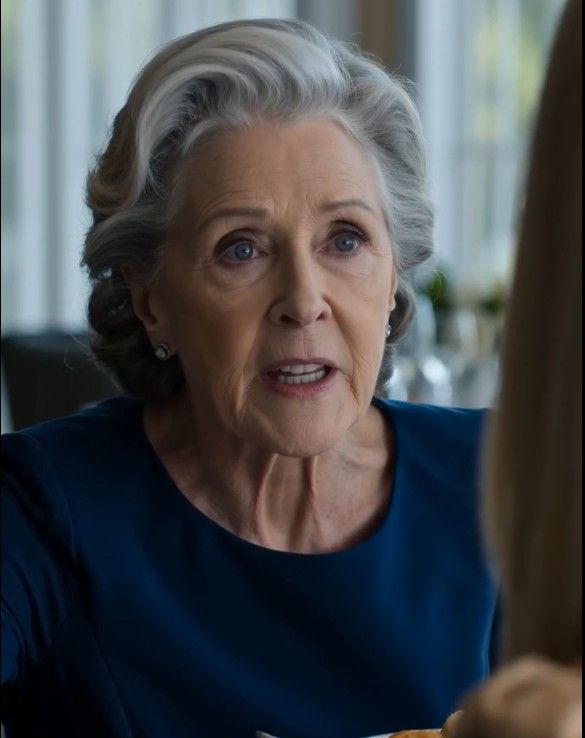
“Did you see me sign?”
“No.”
“Then what did you witness?”
The couple from the nonprofit rose uncertainly from their seats. Conversations softened around us. Brooke looked at the guests and forced a smile.
“Miriam is emotional,” she announced. “We’re honoring her husband, and she thinks every detail needs to run through her.”
I didn’t raise my voice. “An account transfer was scheduled in my name. I didn’t authorize it. Your nonprofit has been sent a pledge I’m being asked to guarantee. I didn’t sign that either.”
Lucas stared at his wife. “You said Mom approved.”
“She always approves eventually,” Brooke said.
Something in his face changed. Not enough to erase what he’d done, but enough to show he understood that “eventually” wasn’t consent. He pushed back his chair and followed me into the hallway. Brooke came after us, furious that anyone might overhear.
“People have flown here to celebrate you,” she told him. “You’re not going to ruin their night over paperwork.”
I pointed toward the dining room. “That’s exactly what you’ve been telling me all evening.”
Claire emerged from the office with one trustee, a quiet man named Samuel Ortiz. He confirmed that their board would suspend any announcement of the award until the funding and authorization were clear. They had received a transfer schedule but no cleared funds. His first concern was that applicants not be promised money the organization didn’t actually have.
“I’m glad,” I said. “My husband would never have wanted a student to be disappointed that way.”
Brooke crossed her arms. “You’re all treating a birthday surprise like a crime.”
“Then the documents will explain it,” Samuel replied.
I returned to the head table long enough to pick up my wrapped gift from the floor. The paper was scuffed, but the box inside had not broken. It held my husband’s old fountain pen, cleaned and fitted with a new nib for Lucas. I put it in my handbag. I wasn’t ready to offer a symbol of trust to a man who had watched someone take away my chair.
The restaurant manager approached. He had already seen the revised banquet charges, and I asked him to print an itemized invoice. I would pay the amount I’d agreed to, I told him, but any additions Brooke had ordered without my authorization would need to be billed to the person who requested them. He said he’d review the signed event agreement. It was the first practical decision of the night that felt entirely mine.
I drove home under a pale street moon. At a red light I remembered my husband’s classroom, the way he would set out extra pencils because he knew some students arrived with nothing. A scholarship in his name could have been beautiful. Brooke had turned it into a weapon by assuming my memories were a resource she could spend.
The next morning my bank confirmed the scheduled transfer had been placed on hold pending investigation. The destination was an account held by a company called Memorial Advancement Services. It was not the nonprofit that had spoken to me at dinner. The bank could not disclose every detail immediately, but it could document the attempted instruction and begin reviewing the credentials used.
I hired attorney Grace Wu, who specialized in elder financial exploitation and civil disputes. I disliked that phrase when she first said it. I didn’t think of myself as helpless; I had managed our household finances for decades. Grace explained that exploitation wasn’t a reflection of intelligence. It was a description of conduct: someone using a personal relationship and access to obtain money without permission.
She helped me secure my accounts, change passwords, check credit reports, and send written notices disputing the pledge and transfer. I filed a report regarding the apparent misuse of my identity. Then I made a list of what I knew and what I only suspected. The distinction mattered. I wasn’t going to build my response on anger alone.
Lucas came to see me on Tuesday, carrying a folder from Brooke’s home office. He sat at the kitchen table where his father used to grade essays and asked whether he could have some water. His voice was hoarse.
“Did you know where the transfer was going?” I asked.
“I thought it went straight to the scholarship fund.”
“Did you look at the beneficiary?”
“No.”
“Why did you sign a witness statement saying I’d signed in front of you?”
He rubbed his thumb across the rim of the glass. “Brooke said the wording was standard. I thought it meant I knew about the gift.”
“That’s not what it says.”
“I know that now.”
