Daniel fired him. The restaurant group referred the financial findings to law enforcement and its insurer. Months later Kent pleaded guilty to fraud-related charges and was ordered to pay restitution. Claire did not follow every hearing. She had spent enough time letting his choices occupy her business.
Lucy’s removal from the schedule was reversed immediately. Daniel offered her reinstatement and back pay for the shifts she lost. She accepted only after he agreed to a written policy protecting employees who reported suspected fraud or safety problems.
“I am not going back just to be the brave waitress,” she told Claire. “I want it to be harder for the next person to get punished for speaking.”
Claire smiled. “Good.”
The restaurant also repaid credits that had been wrongfully taken from the bakery and corrected its vendor records. For Claire, the money helped. The apology mattered differently. Daniel came next door in person and spoke to Owen.
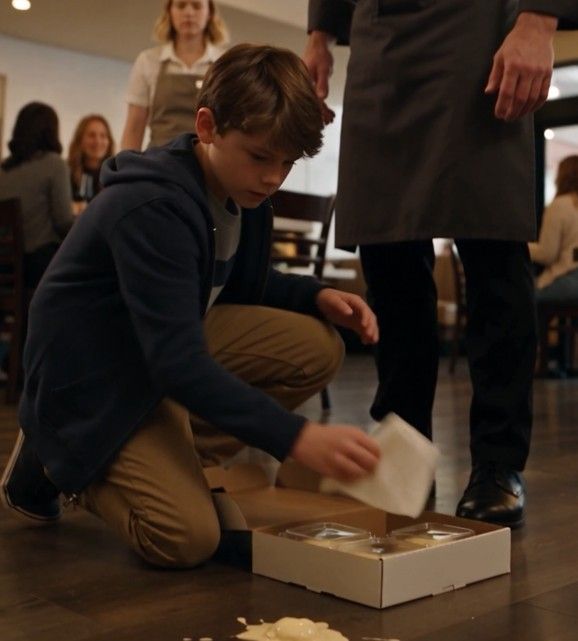
“What happened to you in my restaurant was unacceptable,” he said. “You were helping your mother. You made a small mistake, and an adult used it to embarrass you. I am sorry.”
Owen looked at his shoes. “I did spill it.”
Daniel nodded. “People spill things. We clean them up. We do not turn them into a reason to treat someone badly.”
Owen glanced at Claire. She did not answer for him.
“Okay,” he said.
The investigation also forced Claire to confront how often she had ignored her own instincts because the restaurant account mattered to the bakery. Kent had complained about portions that other customers praised, claimed deliveries were late when Owen had watched the clock, and once insisted a tray had arrived warm even though Claire had packed it in insulated carriers herself. Each time, she had apologized first and questioned herself second.
Her accountant spread the records across the bakery table. “You were protecting revenue,” he said.
“I was protecting a customer who was stealing from me.”
“You did not know that.”
“I knew he made me feel like every complaint was an emergency.”
That distinction changed the way Claire ran the business. She created a simple delivery log. Drivers recorded departure and arrival times. Customers signed after inspecting orders. Claims for damage had to identify the specific item. Claire worried the procedure would feel distrustful. Most customers barely noticed. The only person who had benefited from vagueness was the person exploiting it.
Owen helped design the form because he knew exactly which questions he wished had been answered on the day of the spill. Was the container actually damaged? Was the food returned? Who accepted it? He suggested one line Claire had not considered: If a problem occurs, who was present?
“Witnesses,” Claire said.
Owen shrugged. “Or just people. Lucy was just a person until she said something.”
Claire added the line.
Lucy, meanwhile, struggled with returning to the restaurant. Her first shift back, she froze outside Kent’s old office. Daniel had already changed the lock and boxed Kent’s personal items, but the desk remained. Lucy asked whether she could avoid the room.
“Yes,” Daniel said.
A week later she chose to enter with another manager. She stood beside the desk where she had taken the photograph and realized the room looked ordinary. That angered her at first. Places where bad decisions are made rarely announce themselves. They have staplers, schedules, coffee cups, and fluorescent lights.
She opened the drawer where Kent kept vendor forms. It was empty. Daniel told her the records had been secured for investigators.
“Good,” she said, and closed it.
The produce vendor later organized a meeting among several small suppliers. Claire almost skipped it because she was tired of talking about Kent. She went when she realized the purpose was not to relive the fraud but to compare business practices. They agreed to stop accepting vague claims from large customers simply because the account felt too important to risk.
One older vendor told Claire, “He counted on each of us thinking we were the only one having trouble with him.”
The sentence sounded painfully familiar. It was the business version of what Owen had experienced on the restaurant floor: isolate the person, make them doubt themselves, then call resistance unprofessional.
Claire went home and told Owen.
“So everybody needed a Lucy?” he asked.
