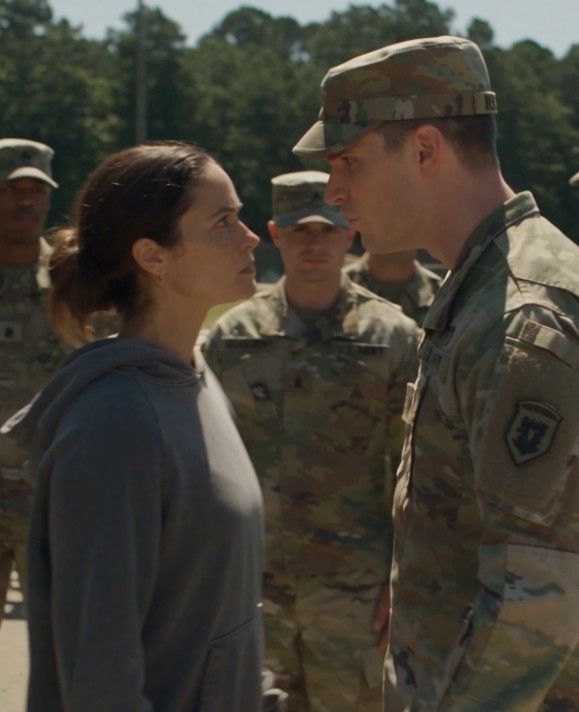
He nodded.
“I will.”
I believed he meant it.
Whether he would manage it was another question.
My father and I had our own argument that evening.
It began in his office after everyone else had gone home. I had come to Fort Liberty because we were supposed to have dinner before I drove back to Raleigh. Instead, I was sitting on the edge of his conference table with a swollen cheek while he signed paperwork he was not allowed to discuss with me.
“You knew the name meant something to Miller,” I said.
He stopped writing.
“What do you mean?”
“When I said Carter, he reacted. Just for a second.”
My father capped his pen.
“There are a lot of Carters.”
“Not that many attached to your office.”
He looked tired.
“Emily, don’t build motives from a facial expression.”
“I’m not. I’m asking whether he knew who I was.”
“The investigation will determine that.”
I hated that answer because it was correct and because it sounded like him.
Two weeks later, the investigation did determine it.
Miller had heard my name before.
Not because I was important.
Because several days earlier, an administrative message had listed me as an approved visitor expected at the office that week. He had not memorized the details, but he had seen the surname and destination. When I repeated both at the gate, he had enough information to make verification more, not less, reasonable.
He still chose not to call.
The investigators could not prove he knew exactly who I was when he struck me.
They did not need to.
The misconduct did not become serious only after my identity was confirmed.
That was the point I cared about most.
Miller was removed from gate supervisory duties while the command process continued. Later, I learned that formal action had been taken against him for the assault, his treatment of personnel, and the inaccurate account he gave immediately afterward. I was not entitled to every detail, and my father refused to feed my curiosity.
At first, that irritated me.
Then I understood why he was doing it.
