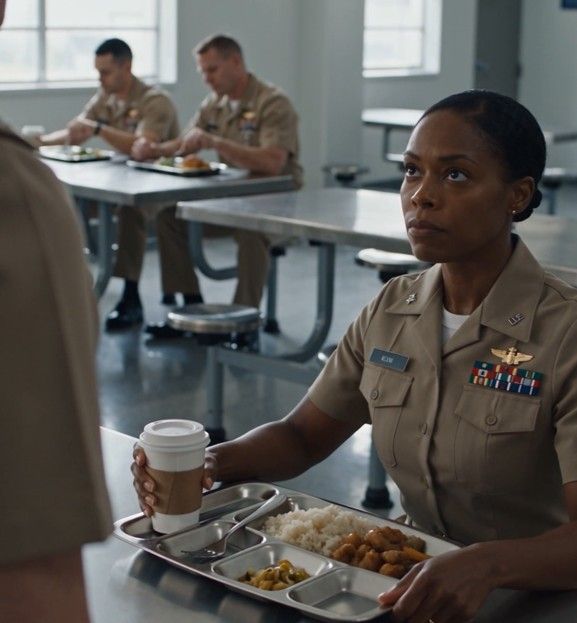
Vanessa did not deny moving the tray.
She did not deny calling the seating area reserved.
She did not deny counseling Sarah afterward.
Instead, she explained that she believed informal separation by rank preserved professional boundaries and prevented junior personnel from becoming too familiar with senior leaders. She said she had been taught early in her career that visible distance protected discipline.
The explanation mattered because it made the problem larger than a bad mood at lunch.
Vanessa had built a private rule from an old belief and then enforced it as though the institution had ordered her to.
One reviewer asked a simple question that appeared in the summary: if the practice was necessary for discipline, why had Vanessa never proposed it as an actual policy subject to review?
She had no clear answer.
Maya read that paragraph twice.
Unwritten rules were powerful partly because nobody had to defend them. They could be presented as tradition to one person, common sense to another, and obvious professionalism to anyone who questioned them. The moment someone asked for the standard in writing, the rule had to survive daylight.
This one did not.
Sarah struggled more than Maya expected after the formal decision went her way. During the conflict she had been focused on the next document, the next statement, the next meeting. Once the counseling was removed, she lost the structure that had kept her moving.
One evening she called Maya from the parking lot.
“Do you ever replay it?”
Maya knew exactly what she meant.
“Yes.”
“I keep wondering if I sounded disrespectful.”
Maya leaned against her kitchen counter.
“You sounded scared.”
Sarah went quiet.
“That’s worse.”
“Why?”
“Because everybody saw it.”
Maya closed her eyes.
There it was: another rule nobody had written. A captain could take professional risk, but she was supposed to look fearless while doing it.
“You swallowed before you answered her,” Maya said. “Your hands were tight on the table. Your face went red. And you stayed standing anyway. That’s not a failure of courage. That’s what courage looked like in the room.”
Sarah did not answer for several seconds.
“I wish I’d felt like that.”
“You don’t have to feel brave for the action to count.”
The next week Sarah repeated that sentence to a junior officer during a mentoring session. Maya heard about it later and smiled. The best corrections moved outward.
