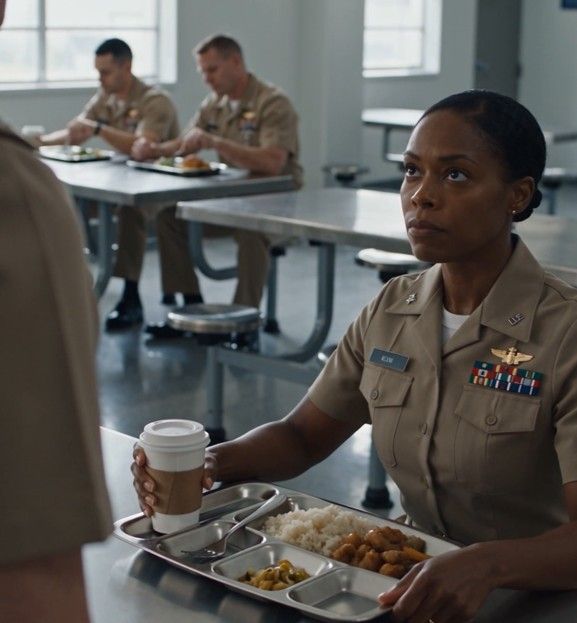
Sarah’s evaluation survived. More importantly, so did her willingness to speak.
The captain from the window began sitting at different tables during lunch instead of choosing the same rank group every day. The two majors who had finally spoken became more deliberate about inviting junior personnel into informal discussions.
Dining services did not create a dramatic new campaign.
They simply posted the existing open-seating policy where nobody could pretend it was secret.
Maya laughed the first time she saw the sign.
“All this over a chair.”
Sarah shook her head.
“It was never the chair.”
She was right.
Months later, Sarah admitted what the confrontation had cost her privately.
She and Maya were eating outside because the weather had finally cooled.
“I almost sat down,” Sarah said.
Maya looked at her.
“That day?”
“When Vanessa told me to. Before I said anything about humiliation.”
“Why didn’t you?”
Sarah rubbed one thumb over the edge of her cup.
“Because I watched you release the chair.”
Maya waited.
“You didn’t look angry. You looked like you’d done the calculation and decided losing lunch was cheaper than making the room uncomfortable.”
Sarah’s eyes dropped.
“I recognized it.”
“From what?”
“Me.”
That answer changed Maya’s understanding of the entire scene.
Sarah had not stood because she was fearless.
She had stood because she knew the habit of making yourself smaller to protect everyone else from discomfort.
The beautiful twist was not that Maya turned out to outrank anyone.
She never did.
It was that the person who seemed to be rescued by Sarah’s offer became the person who preserved Sarah’s voice when the consequences arrived later.
