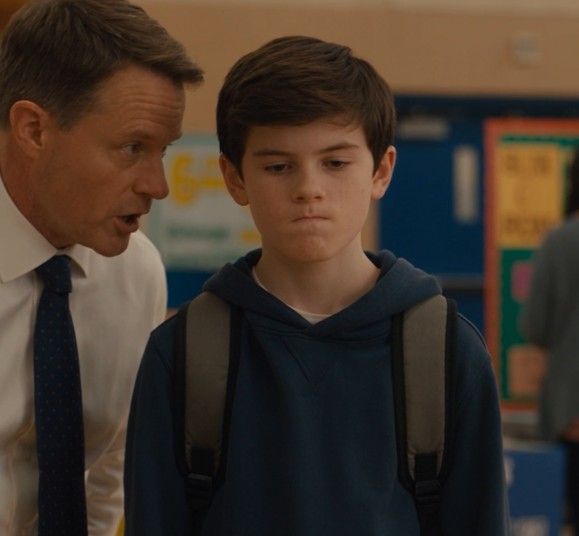
At home, Logan’s parents had a harder conversation with Mr. Pritchard than Logan expected. His mother had admired her brother’s involvement in the robotics club for years and had often treated his opinions about achievement as expert advice. Now she had to confront how much pressure he had placed on her son while calling it ambition. She told Logan that wanting recognition was not wrong, but taking someone else’s work and letting an adult humiliate that person was. She also told him he would have to live with Theo’s anger even if his apology was sincere.
That mattered because Logan had been waiting for adults to turn remorse into immediate relief. His mother refused to do that for him.
Theo did not ask for any of that.
He also did not ask adults to make it disappear because Logan was sorry.
That distinction mattered.
The Monday after the fair, Logan sat two seats away from Theo in science class.
They had always shared supplies without thinking. Now both reached for the ruler at the same time and stopped.
Logan pulled his hand back.
Theo took the ruler.
The distance between them felt enormous.
At lunch, Logan sat with someone else.
For several weeks, that was how things stayed.
Theo missed him.
He was angry that he missed him.
His father understood better than Theo expected.
Their evenings at the kitchen table changed after the fair. Theo’s father had always helped only where asked, cutting cardboard along marks Theo made and holding pieces while glue dried. Now he became even more careful about the difference between support and ownership. When Theo started a new class project, his father asked before offering ideas. Theo noticed the question because of what Mr. Pritchard had done to Logan in the opposite direction—turning guidance into pressure until the child’s work became a test of the adult’s expectations.
One night Theo asked whether his father had ever wanted him to win badly enough to be disappointed by second place.
His father considered it.
“I want good things for you,” he said. “But if I ever make you think my pride depends on a ribbon, tell me I’m being an idiot.”
Theo grinned. “Can I use that exact word?”
“Probably once.”
The answer made the room feel normal again. Theo realized he had never been afraid to tell his father when a measurement was wrong or a plan failed. That freedom had been so ordinary he had not known to value it. Seeing Logan under his uncle’s approval had shown him what collaboration looked like when affection became conditional. He went back to sanding a cardboard edge, suddenly grateful for the quiet man across the table who could help without needing the project to prove anything about himself. It was a kind of safety Theo finally knew how to name.
“You can miss somebody and still not trust them,” he said one evening at the kitchen table.
Theo was repairing the bridge again because the fair transport had loosened one joint.
“That’s stupid.”
“It’s inconvenient.”
“That’s the same thing.”
His father laughed.
Then he grew serious.
“Don’t rush yourself because people like a clean ending. He hurt you. If you become friends again, it should be because trust grows back, not because everyone got tired of the awkwardness.”
