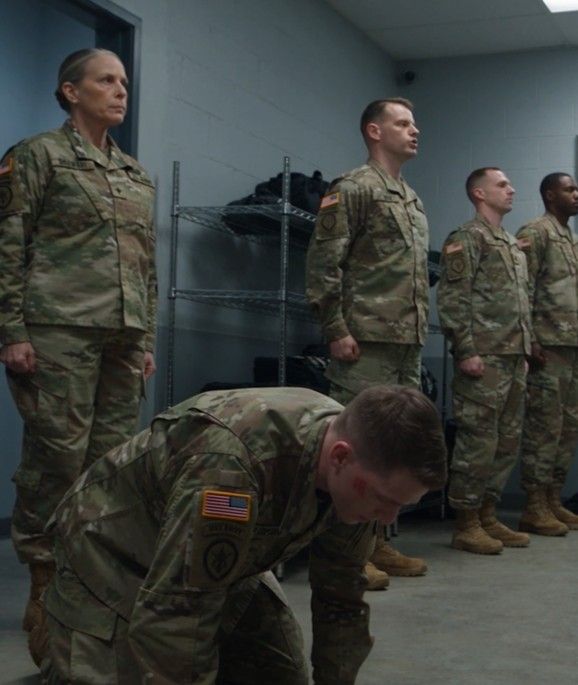
For a moment, she could not speak.
Then she abandoned the prepared remarks.
“I spent a long career believing leadership meant knowing when to give an order,” she said. “Near the end, I learned it also means knowing when your authority makes someone afraid to tell you the truth.”
She did not name the case.
She did not need to.
Afterward, Andrew handed her a small package.
Inside was a doorstop.
A plain wedge of polished wood.
Evelyn stared at it.
He smiled. “For your retirement office.”
“What retirement office?”
“You’ll find something to organize.”
She laughed.
Then she saw words burned into the side.
KEEP THE DOOR OPEN.
Her eyes filled.
The gift recontextualized the locked room, the notebook, and the years between them without pretending any of it had been necessary. The lesson was not that harm had produced something beautiful.
The beauty was that people had refused to let harm have the last word.
Evelyn used the doorstop at home, in the small room where she volunteered twice a week helping military families navigate complaint and support systems. She never presented herself as the expert who had fixed everything. She told people she had learned late and was still learning.
Andrew visited sometimes.
Dean visited once after promotion and laughed when he saw the wedge under the door.
“You actually use it.”
“Your generation seems obsessed with making sure I understand metaphors.”
He grinned.
On a quiet afternoon, Evelyn opened a copy of the old notebook kept for the public archive after names were protected. Her finger stopped at Andrew Hart.
For years, that name had represented the career she thought her son abandoned.
Now it represented the line he refused to cross.
She closed the book.
From the hallway came Andrew’s voice arguing with her about dinner plans.
Evelyn stood, left the office door open, and followed the sound.
