One morning, he brought the notebook.
“The investigators are done with the copy,” he said. “This is the original.”
Evelyn looked at it but did not reach.
“Do you want it back?”
“No.”
“What should happen to it?”
Andrew turned it over in his hands.
“For years I thought the list mattered because it proved what they did.”
“It did.”
“Now I think it matters because it proves people kept each other from disappearing.”
He opened to the first page.
Beside several names were small initials, each added by whoever passed the notebook on. Evidence of a quiet chain of people refusing to let the record vanish.
Evelyn had seen only the names and dates before.
Now she saw the handwriting around them.
“Dean carried it last,” Andrew said.
“And you before him.”
“And someone before me.”
He slid the notebook across the table.
“Give it to the archive when the case is fully closed. Not as a trophy. As a reminder.”
Evelyn nodded.
The final reform package required every unit to provide a reporting route outside the immediate chain of command and prohibited informal corrective practices involving physical punishment, humiliation, or retaliation. Leaders received training built around anonymized cases from the investigation.
Evelyn insisted one detail remain explicit.
“Unit tradition” was not a defense.
The phrase that had changed the room on the first day became the phrase used to dismantle what happened there.
The soldiers whose names appeared in the notebook did not all want the same kind of closure. One wanted a corrected evaluation. Another wanted his discharge record reviewed. Several wanted no contact with the Army beyond the interview they had already given. Evelyn learned not to turn institutional repair into another demand placed on people who had already carried too much.
The command established a process for former soldiers to request review without returning in person. Adverse reports connected to retaliation were reexamined. Some were corrected. In cases where the evidence could not support a formal change, written addenda were added so the original record would no longer stand without context.
Dean asked for something simpler.
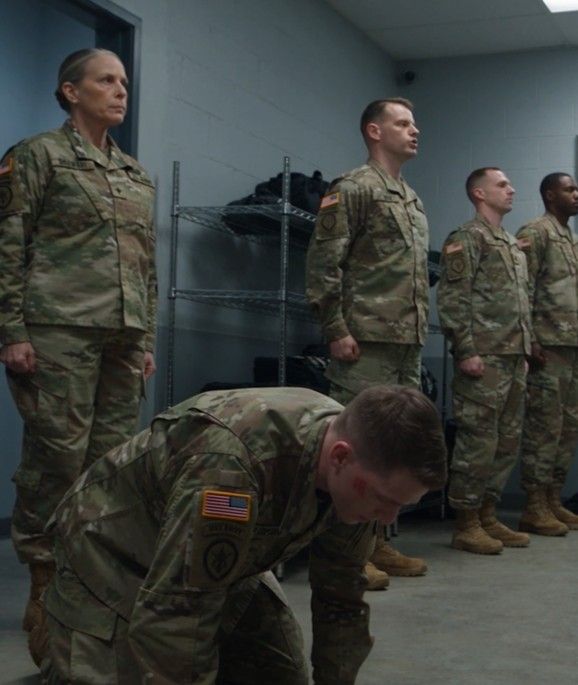
He wanted the four soldiers who had stood along the wall that first day not to be punished merely for being afraid.
“They watched,” one investigator said.
“They were also waiting for their turn,” Dean answered.
