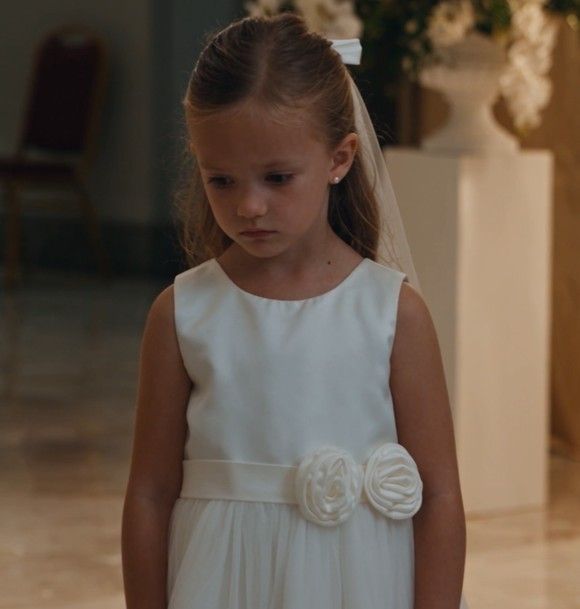
That became the rule Evie could understand. Not promises. Not tears. Not grown-up explanations. What people did next.
The rule also changed how Evie spoke about the wedding. At first, if someone asked whether she had fun being a flower girl, she said yes automatically. Later she learned she could say, “Some of it was fun,” and leave the sentence there. She did not owe strangers the frightening part, and she did not have to erase it either. Her mother noticed the difference and stopped answering questions for her unless Evie asked. Little by little, the story became something Evie owned instead of something that had happened around her while adults controlled the meaning. That ownership mattered almost as much as any apology because it returned to her the choice Celeste had taken in the corridor. She could tell it herself now.
Evie’s mother refused to let Celeste deliver the apology until the counselor helped her remove every sentence that sounded like an explanation.
The first version said, I was under so much pressure.
That line came out.
The second said, I never meant to frighten you.
That came out too.
What remained was shorter.
I grabbed you. I scared you. You were helping me, and I treated you as if you had done something wrong. You did not deserve it. You do not have to forgive me or be alone with me. I am sorry.
Evie’s mother read it to her.
Evie asked, “Do I have to answer?”
“No.”
So she did not.
Months passed.
The wedding became less important at school than Evie had feared. Her classmates cared more about a field trip and a missing class hamster than whether she had been a flower girl. The satin shoes stayed in the back of her closet.
Sometimes she still checked adults’ faces when she spilled something.
Her mother noticed.
One afternoon Evie knocked over a glass of milk at dinner. The glass did not break. Milk spread across the table.
Evie froze.
Her mother reached for a towel.
“Can you lift your book?” she asked.
That was all.
Evie lifted the book.
They wiped the table together.
The normality of the accident became its own kind of healing.
Her relationship with Celeste returned slowly and with limits. Before the first visit, Celeste asked whether she should bring the restored bouquet ribbon she had saved from the wedding. Evie’s mother said no. She did not want the meeting turned into a sentimental scene organized around Celeste’s need to be forgiven. So Celeste arrived empty-handed. That, strangely, made Evie’s mother trust the effort a little more.
The first visit was at a park with Evie’s mother present. Celeste did not hug her. She brought no gift. They walked near the pond and talked about ducks.
The second visit lasted an hour.
The third included the groom, who was still married to Celeste but no longer willing to protect appearances at the expense of difficult conversations. Their marriage had changed. He trusted her more slowly than before. She accepted that.
Celeste’s consequence was not public ruin.
