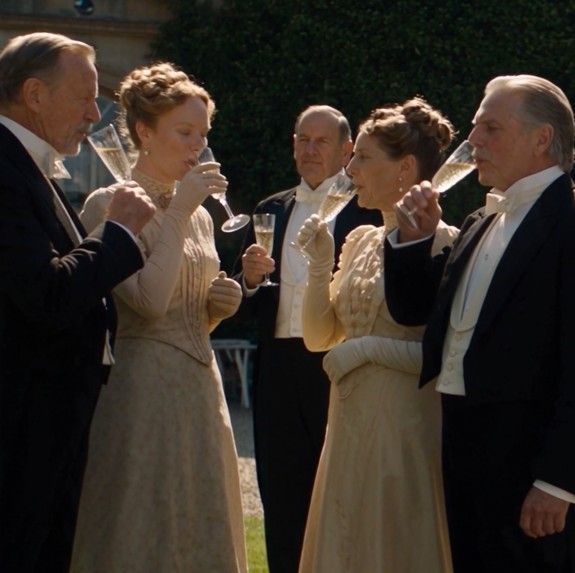
The horse’s scream split the afternoon just as the crowd was raising its champagne glasses. One second, the lawn shimmered with polished shoes, silk dresses, and polite laughter. The next, a white stallion tore through the perfect calm, rearing high above the gravel path as if it had finally decided it could no longer endure whatever this place had made of it. The guests gasped and scattered. At the center of it all sat the girl in the wheelchair, dressed like something delicate enough to be admired but not touched. Her hands tightened around the armrests. Her face stayed still, but her eyes changed first—wide, bright, and suddenly alive with a fear that seemed older than the moment itself. Behind her stood her father. His tuxedo was flawless. His posture was commanding. He had the kind of presence that made servants lower their heads and wealthy men laugh too quickly at his jokes. On any other day, he might have looked like the master of the estate. In that instant, with panic cracking through the manor grounds, he looked like a man losing control. “Guards!” he shouted. “Get that animal away from her!” The stallion came down hard, hooves tearing at the earth, muscles wild beneath its white coat. Its eyes rolled with terror, not cruelty. It wasn’t charging like a monster. It was fleeing like one had been chasing it. The crowd did not notice the difference. They only saw danger. Then a boy appeared. Barefoot, thin, and covered in the dust of the stables and fields, he ran straight across the manicured lawn while everyone else pulled back. He didn’t hesitate. He didn’t stop to judge the risk. He moved with the fast, instinctive certainty of someone who understood frightened creatures better than frightened people. He reached the stallion just as it veered toward the girl. His fingers caught the reins. The horse jerked violently, but the boy held on, planting his heels into the soft earth. He spoke to it in a low voice no one else could hear, his body bent close, his hands steady despite the force trying to tear free from him. For one suspended second, the impossible happened. The horse listened. Its front legs came down. Its head tossed once, twice, then lowered just enough for the boy to keep it from crashing into the wheelchair. The guests stared in disbelief. The father did not. “Let go of that horse!” he barked, striding forward with fury far greater than fear. “You’re ruining this house!” The boy looked up, stunned, still struggling to hold the animal still. The order made no sense. He had just prevented catastrophe. The girl in the chair was staring at him now, not with alarm, but with something softer—something that looked dangerously close to hope. The father saw that too. And something dark flashed across his face. He reached the boy in three hard steps and shoved him with both hands. It was not the panicked movement of a frightened parent. It was forceful. Deliberate. Violent enough to send the boy crashing sideways into the gravel. A murmur ran through the crowd. The reins slipped. The horse snorted and sidestepped, but did not bolt. It stood trembling, as if even it had been shocked by what had just happened. The boy hit the ground near the girl’s wheelchair. His bare foot slid forward across the grass and brushed against her ankle—just a glancing touch against the cold, still leg tucked beneath the fine fabric of her dress. Then everything changed. The girl gasped. Not politely. Not softly. Her body jerked as though a live wire had run through her. Her fingers dug into the chair. Her shoulders lifted. A visible jolt traveled through her, sharp enough that several guests recoiled as if they had felt it too. Tears sprang into her eyes. She looked down at her own leg. Then at the boy. Then at her father. The lawn fell silent except for the ragged sound of the stallion breathing and the soft clink of a champagne glass slipping from someone’s hand onto the grass. The father had gone still. Too still. The girl’s lips parted. Her face, pale only seconds before, now held something far more dangerous than fear. It was recognition. It was disbelief. It was the first crack in whatever story she had been forced to live inside. And in that terrible, trembling silence, everyone seemed to understand they had not just witnessed a near-tragedy at the manor—they had witnessed the beginning of something her father had spent years trying to keep buried. 👇
“I felt that.”
The girl’s voice was barely louder than the stallion’s breathing.
Her father turned toward her so quickly that several guests noticed.
“What?”
She stared at her ankle.
The barefoot boy was still on the gravel where her father had thrown him. One palm was bleeding. His chest rose and fell hard from the struggle with the horse.
The girl lifted her eyes.
“I felt his foot.”
Her father’s face changed.
Only for a second.
Then command returned.
“No, Lydia. You had a reflex.”
The girl’s name moved through the crowd in whispers.
Lydia Vale.
She looked at him.
“You said I couldn’t feel reflexes.”
Her father’s jaw tightened.
“This is not the time.”
The boy pushed himself upright.
The stallion tossed its head but stayed beside him.
“Sir,” he said, “you need to loosen the curb strap.”
Lydia’s father stared at him as if the words were an insult.
“Get off my property.”
“The strap’s cutting him.”
The boy reached slowly toward the horse’s bridle.
A red line showed at the corner of the stallion’s mouth.
Several guests saw it.
So did Lydia.
Her father stepped forward.
