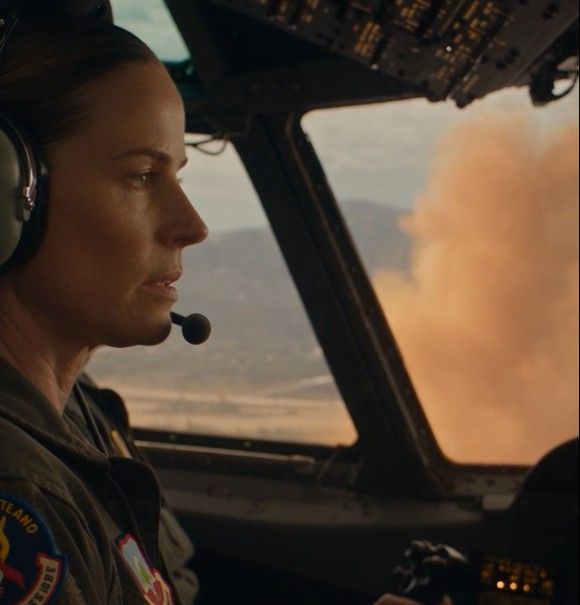
The man on the rescue radio gave an address the pilot knew by heart. It was the house where her father had told her never to come back.
Chief Warrant Officer Grace Holden tightened her hand against her knee before answering. Below the aircraft, wildfire smoke obscured the ridge, hiding the road she once drove every weekend to deliver groceries.
Her Guard crew had been supporting evacuations through the afternoon. Grace had heard frightened voices for hours, but this one reached through the professional steadiness she had built around herself.
Her father, Raymond, had refused earlier requests to leave. Now the access road was blocked, and he was sheltering with a neighbor who had come to help him.
Grace gave the information to her crew without announcing the relationship. She needed them assessing the situation in front of them, not trying to manage her family while they worked.
The last time she saw Raymond, he called her selfish. Her mother’s health had been worsening, and he blamed every absence on a career he had never learned to respect.
Grace arranged visits, paid for help when she could, and still missed the final night. Raymond told her not to wear a uniform to the funeral if she expected him to look at her.
She attended in a plain black dress. Afterward, they stopped speaking except through her brother.
Now Raymond’s voice came through again, asking whether anybody was actually coming. Grace heard him cough and recognized the old habit of hiding fear inside irritation.
Her crew worked through the options available to them. Smoke and changing conditions made everything uncertain, and Grace knew wanting a particular outcome could not make it possible.
“You know this location?” her fellow pilot asked. She answered yes, then added the fact she had been trying to keep separate.
He looked at her briefly. “Tell me if you need me to take over.” There was no accusation in it, which made answering honestly easier.
Grace said she could continue for now. Below them, a familiar clearing appeared through a break in the smoke, smaller than it had been in childhood.
The rescue team made contact with the two men. Raymond insisted his neighbor go first, the same stubbornness that had kept him home now making him refuse the first offered hand.
Grace listened to the exchange through her headset. She wanted to tell him she knew that trick, turning fear into sacrifice so nobody could challenge it without sounding ungrateful.
Then his voice changed. “My wife’s things are inside,” he said.
The sentence made Grace see the house as he saw it: a thousand ordinary objects keeping someone present after every official goodbye was finished. She had spent years thinking he stayed angry because anger suited him.
Perhaps it was also what happened when grief had nowhere else to stand. That understanding did not erase his words at the funeral, but it made her next breath hurt differently.
Conditions shifted again. The crew called for the men to move, and Raymond asked who was flying the aircraft.
Grace’s colleague glanced toward her. She could let someone answer without a name and remain a voice belonging only to the rescue.
Instead, she spoke directly. “Dad, it’s Grace.”
The response vanished into several seconds of radio silence. Then her father’s voice returned, smaller than she had ever heard it, as he began the sentence neither of them had been willing to say on the ground. 👇
“I should have called you,” Raymond said.
Static broke the sentence into pieces, but Grace heard it.
She kept both hands where they belonged and her voice level.
“We’ll talk about that after you’re out. Right now I need you to follow the rescue team.”
Her father coughed.
“Your mother would be furious with me.”
Grace almost laughed, almost cried, and did neither.
“Then don’t give her more material. Move.”
