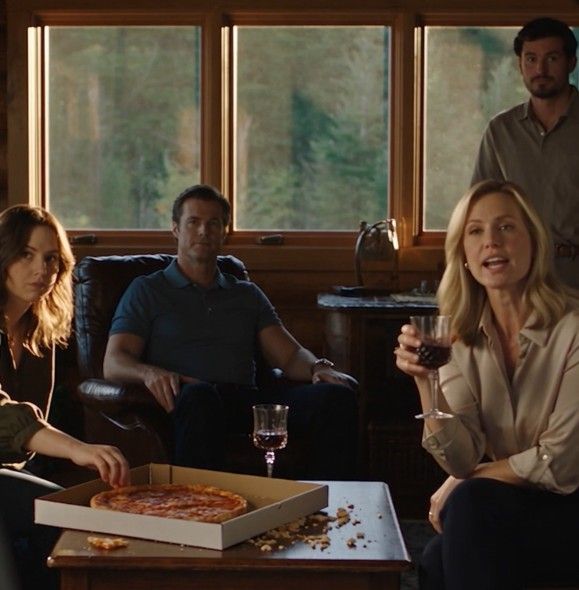
Karen lifted my crystal wineglass and asked, “Margaret, what are you doing here?”
I stood inside my own mountain cabin, looking at her muddy shoes on my rug. Beside her, Paul and three relatives were eating pizza around the walnut coffee table. My best Merlot sat half-empty among their greasy plates.
“This is my house,” I said.
“Emily said we could come. Besides, it’s going to be Emily and Mark’s one day anyway.”
I was sixty-nine, widowed, and very much alive. I had driven into the Smoky Mountains expecting an empty cabin and a meeting with a realtor, not my daughter-in-law’s parents practicing ownership.
Thomas and I had spent forty years building memories there. On the porch, a small burn on the railing still marked the spot where he had once dropped a hot coal from the grill.
But memories did not pay property taxes, insurance, maintenance, or medical bills. Long-term rental income was part of my retirement plan. Three weeks earlier, I had told Mark that relatives would no longer be able to use the cabin whenever they wished.
He had nodded and promised to speak to Emily.
Now her parents had a spare key. The key I had given my son years ago for emergencies had become permission for a four-day getaway. Even the locked wine cabinet had been opened.
Karen followed me into the kitchen and said they were only enjoying the place a little early. She made my ownership sound like an inconvenience time would eventually remove.
I gave everyone thirty minutes to pack and leave.
As I stepped onto the porch, Karen called after me, asking whether I could take the garbage down when I left.
I drove back to Greenville without answering. At my townhouse I made tea and opened the savings account labeled “Mark — First Home.” For twelve years I had added money from birthday savings, Thomas’s life insurance, investment returns, and the sale of his fishing boat.
Sixty thousand dollars waited there.
When I finally answered Mark’s call, he blamed the arrangements on Emily. Then he admitted he had known.
“We didn’t ask because we knew you’d say no,” he said.
I asked whether he had told her parents the cabin would eventually belong to them. After a long pause, he admitted he might have said something like that.
He called me dramatic when I asked whether they had been discussing my death.
I told him to come alone the next morning. Emily then sent a message accusing me of risking their future over a harmless weekend.
At 8:17 that evening, I moved the full sixty thousand dollars into retirement savings held only in my name. I arranged to have the cabin’s locks replaced.
Mark arrived angry, expecting a dispute about cleaning and wine. I told him about the account I had once saved for his first home.
The expression that crossed his face made me set my untouched tea down.
His mouth opened before he seemed to remember I was watching. For a second there was no anger in his face at all. There was eager surprise.
“Sixty thousand?” he said.
I nodded.
“That would cover so much of the down payment. Why didn’t you tell us?”
The question struck more sharply than Karen’s words in the cabin. I had told him what he had broken, and he was already measuring what the discovery could buy.
“Because it was mine to decide whether to give,” I said. “And I have decided not to.”
He sat back. “You’re saying this to punish us.”
“I am saying it because you made plans for my property after I explained what I needed. You admitted you did not ask because you knew I would refuse.”
“It was one weekend.”
“It was a decision that my no didn’t count.”
He looked toward the window. A delivery van stopped across the street, and for a moment I could hear its engine more clearly than anything in the room.
“You were saving the money for me,” he said.
“I was. Saving it was a choice. Giving it would have been another choice. You have been speaking as if neither belonged to me.”
His face reddened. “Emily will think you never intended to help.”
“I cannot control what Emily chooses to think.”
That was an unfamiliar sentence in my mouth. For years I had treated Emily’s displeasure like bad weather I ought to prepare for and prevent. Now I let the words stand without adding a concession.
Mark asked whether I had really moved the money. I said yes. I did not turn the laptop toward him or show a balance. Proof of my decision did not require giving him a view into my accounts.
He stood and paced beside the bookshelf. Thomas’s photograph was there, tucked between books my son had never borrowed. Mark paused near it, then moved on.
