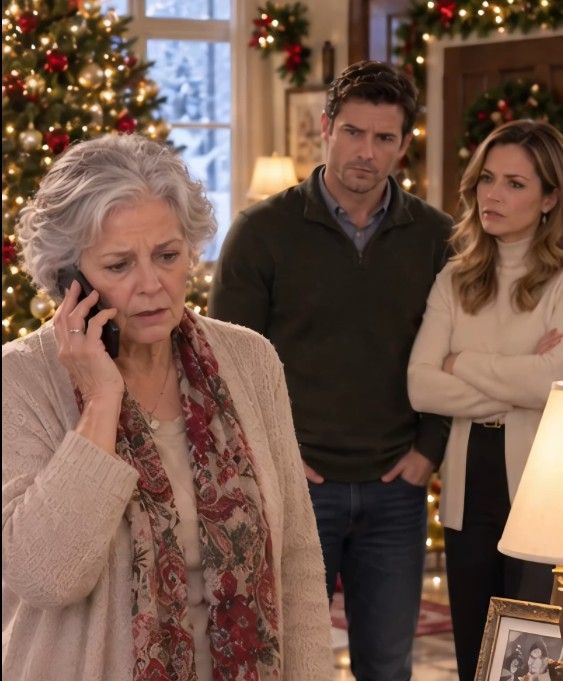
Sylvia sat with a bank representative and answered no when asked whether the charges on her card were authorized. There were thirty-seven transactions. Dean knew Priscilla had used his mother’s card sometimes, but the full list and dates shocked him. Priscilla insisted the situation was being blown out of proportion.
“Are these charges authorized by you?” Credit Card Representative said. The line landed before anyone in the room had time to soften it or pretend it meant something else.
“No.” Sylvia said. No one could take the words back once they were in the air; the next silence made them feel even sharper.
Sylvia answered, “They are not.” The answer changed the temperature of the scene, not because it was loud, but because it forced everyone present to respond to the reality already in front of them.
Then came the line that pushed the confrontation another step forward. “We’ll begin the fraud investigation immediately.” Credit Card Representative said, and the people around them watched the balance of the moment shift again.
“Mom…” Dean said. The words were followed by the kind of pause in which breathing, eye contact, and the smallest movement suddenly mattered.
“No.” Sylvia said. No one could take the words back once they were in the air; the next silence made them feel even sharper.
Sylvia answered, “That is the word you should’ve heard.” The answer changed the temperature of the scene, not because it was loud, but because it forced everyone present to respond to the reality already in front of them.
Then came the line that pushed the confrontation another step forward. “This is getting blown out of proportion.” Priscilla said, and the people around them watched the balance of the moment shift again.
“Out of proportion?” Sylvia said. The words were followed by the kind of pause in which breathing, eye contact, and the smallest movement suddenly mattered.
“March 14.” Sylvia said. No one could take the words back once they were in the air; the next silence made them feel even sharper.
Dean answered, “What is this?” The answer changed the temperature of the scene, not because it was loud, but because it forced everyone present to respond to the reality already in front of them.
Then came the line that pushed the confrontation another step forward. “Your wife knows.” Sylvia said, and the people around them watched the balance of the moment shift again.
“Dean, we talked about this.” Priscilla said. The words were followed by the kind of pause in which breathing, eye contact, and the smallest movement suddenly mattered.
“Did you know?” Sylvia said. No one could take the words back once they were in the air; the next silence made them feel even sharper.
Dean answered, “I knew she used the card.” The answer changed the temperature of the scene, not because it was loud, but because it forced everyone present to respond to the reality already in front of them.
Then came the line that pushed the confrontation another step forward. “Mom, I’m sorry—” Dean said, and the people around them watched the balance of the moment shift again.
“How many times did you use my card?” Sylvia said. The words were followed by the kind of pause in which breathing, eye contact, and the smallest movement suddenly mattered.
“It wasn’t like that.” Priscilla said. No one could take the words back once they were in the air; the next silence made them feel even sharper.
Sylvia answered, “How many times?” The answer changed the temperature of the scene, not because it was loud, but because it forced everyone present to respond to the reality already in front of them.
Then came the line that pushed the confrontation another step forward. “Not that many.” Priscilla said, and the people around them watched the balance of the moment shift again.
“Thirty-seven transactions.” Sylvia said. The words were followed by the kind of pause in which breathing, eye contact, and the smallest movement suddenly mattered.
“I didn’t know that.” Dean said. No one could take the words back once they were in the air; the next silence made them feel even sharper.
Sylvia answered, “Did you ask permission even once?” The answer changed the temperature of the scene, not because it was loud, but because it forced everyone present to respond to the reality already in front of them.
The fraud investigation began with one date, then another, then thirty-seven separate charges. Dean looked at his wife and realized that ‘we talked about this’ did not mean what he thought it meant.
The crisis did not dissolve when the last voice fell silent. It became heavier. Sylvia remained in the bank meeting and Sylvia’s home, aware of every detail the body had ignored during the confrontation: the ache in the jaw, the dry mouth, the pulse in the wrists, the unnatural stillness of people who were waiting to see who would move first. The list of thirty-seven disputed card transactions sat inside that stillness like a question no one could push aside. Priscilla tried a familiar expression — part annoyance, part disbelief — but it did not produce the old result. Sylvia did not shrink. The people around them did not immediately look away. That was the first real break in the pattern. Sylvia took one careful breath and let the shock become information instead of panic. Who had seen what? Which claim could be tested? Which decision could not be undone once made? Those questions arrived one after another. They were practical, almost plain, and because of that they were powerful. Priscilla had expected emotion to make Sylvia easier to control. Instead, emotion sharpened the need for clarity. No one in the room was ready for what came next, but everyone understood that the next answer had to be grounded in something stronger than loyalty, shame, or family pressure.
There was a moment when Sylvia nearly stopped. The next fact would change relationships, not just end an argument. But withholding it would preserve exactly the arrangement that had caused the damage. So Sylvia continued. The explanation began with the list of thirty-seven disputed card transactions and ended with the truth that had been protected from view: The transaction review showed Priscilla had continued using Sylvia’s card after the limited permission Sylvia once gave for a family emergency had ended. She had saved the card information and treated repeated purchases as an extension of that old permission. Dean knew about a few early charges but had never been told how many followed. Nothing in the room moved for a beat. Even Priscilla seemed stunned by how complete the picture became once the missing piece was named. The first response was denial. The second was minimization. The third was an attempt to blame the pressure of the situation. Sylvia listened to all three and then asked a simple question: which choice, specifically, had someone else forced Priscilla to make? No answer came. That silence did not make Sylvia feel powerful. It made Sylvia sad. Accountability was necessary, but necessity did not make it painless.
The confrontation that followed was messy in the human way real confrontations are messy. Priscilla spoke too quickly, stopped, began again, and reached for explanations that contradicted one another. Sylvia did not answer every sentence. That restraint made the important answers sharper. When Priscilla said the situation had been misunderstood, Sylvia asked which visible action had been misunderstood. When Priscilla said family should protect family, Sylvia asked why protection had only ever been expected from the person being hurt. Support was already available in concrete forms: the bank fraud investigator, Dean once he provided the messages he had with Priscilla, and Sylvia’s own retained statements. Nobody took over the scene. A trusted person stayed close enough to make the new boundary real and spoke only when a fact needed confirmation. That was important to Sylvia; being supported was not the same as being rescued. The point was not to replace one authority with another. It was to restore Sylvia’s right to decide what happened next. In the bank meeting and Sylvia’s home, people who had once avoided conflict began admitting what they had seen or ignored. None of those admissions were dramatic on their own, but together they removed the last shelter from denial. A look. A canceled visit. A cruel joke everyone had pretended not to hear. A financial expectation treated as automatic. A door that had been closed too hard. The pattern became communal knowledge. Priscilla’s anger rose as control fell. Sylvia felt fear move through the body, but this time fear did not dictate retreat. The fear was acknowledged, and the boundary remained.
Then came the decision everyone had been circling. Sylvia chose to dispute every unauthorized transaction and refused Dean’s offer to repay everything immediately if she would keep the matter private. She wanted the record corrected and the boundary made formal, not hidden by another family transfer. Sylvia hated how final the words sounded. Part of the heart still wanted an outcome in which nobody had to lose anything — no relationship, no home, no reputation, no sense of family. But that outcome had already been made impossible by the choices that caused the crisis. Pretending otherwise would only transfer the loss back onto Sylvia. Priscilla pleaded for time, then demanded it, then accused Sylvia of cruelty for refusing it on the old terms. Sylvia offered something narrower: time to take responsibility, not time to continue control. That distinction became the line every next decision would have to follow.
Priscilla’s collapse of control was not cinematic in the cheap sense. It was worse for someone who had relied on dominance: it was procedural, witnessed, and difficult to reverse. Priscilla’s defense failed when the timeline showed the permission had ended months before most charges occurred. The card was canceled, disputed transactions were processed under bank procedures, and Dean stopped describing the use as something Sylvia had agreed to. Every step tied back to a choice already made, a word already spoken, a record already created, or a boundary already crossed. Sylvia did not have to invent a punishment. The consequences had been built into the conduct from the beginning; they only needed to be allowed to arrive. Priscilla protested, then bargained, then became very quiet. Around the room, people who had previously been afraid of making Priscilla angry began speaking in normal voices. That change in volume was almost shocking. No one was whispering permission anymore. No one was asking whether Priscilla would approve. Sylvia watched that change and understood that accountability can alter a room before it alters a life. When the final practical step was completed, the silence afterward felt vast. Nobody rushed to fill it. The people who had been hurt needed to hear what safety sounded like when the person who controlled the mood no longer controlled the outcome.
