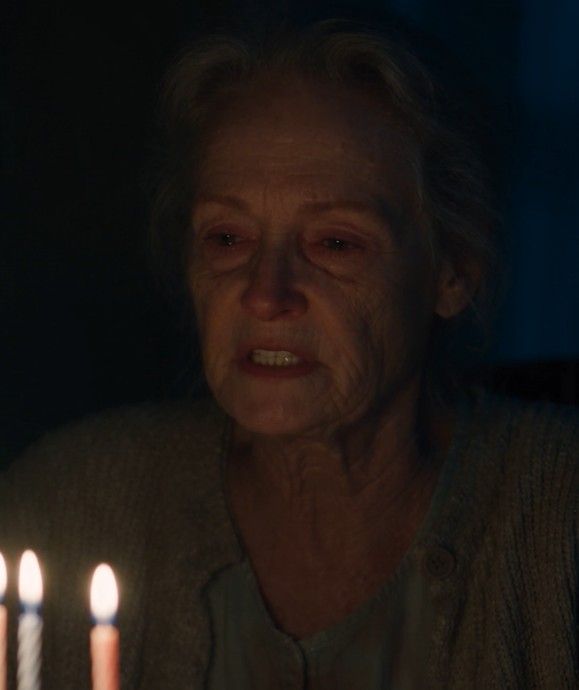
The table was set for eleven, but every chair stayed empty. I had pressed the embroidered cloth my mother gave me the year Thomas and I married, counted the plates twice, and filled eleven glasses with ice water so no child would feel forgotten. The roast sat untouched in the oven. A cake waited with seven candles for my seventieth birthday. By late afternoon, the refrigerator hum and the melting ice were the only sounds in the house.
I stood at the counter looking at the cake and understood what I had refused to see: this was not an accident.
Thomas had been gone fourteen months. Pancreatic cancer. Eleven weeks from diagnosis to the end, which the doctors called quick, as though speed could be a kindness. He was sixty-eight. Tomato seedlings still waited in the garage. A library book remained on his nightstand, unfinished. I returned it for him, then sat in my Buick for twenty minutes before I could drive.
For thirty-one years I taught fourth grade. I cooked dinner, drove children to soccer and piano, and kept things together while Thomas worked at the plant. I never counted favors. I thought that was what love looked like: showing up and doing the work.
I should have counted.
After the funeral, the calls faded. Daniel, who once called every Sunday, now called once a month if something reminded him. Marcus sent links and photos of the boys instead of his voice. Patrice still answered, but carefully, like someone performing the part of a daughter.
I told myself we were all grieving. Eight months after Thomas died, Daniel asked for help with a house down payment. I sent twenty thousand dollars. Three months later, Marcus needed fifteen thousand for flights to see Sandra’s sick mother. Patrice mentioned a transmission, a roof, tuition, then fell silent. Most times, I filled the silence.
I saw the pattern. I just did not want to believe my children had become people who reached for me mostly when they needed something. So I kept showing up.
Tonight, at seventy, I finally stopped. I blew out the candles one by one. I was still in the dark kitchen when the front door opened. Footsteps crossed the hall—not the hesitant shuffle of someone late, but confident and familiar.
Then a voice I had not heard in months called out, “Mom? You still up?”
I did not answer. I listened as they walked toward the dining room and thought of the envelope in my nightstand drawer, the one with Thomas’s handwriting, found in his toolbox the week after his funeral. I had hidden it because I thought I had buried that secret with him.
I was wrong.
“Mom?” Daniel called again, closer now. I stood in the dark with one hand on the counter and the other curled around nothing. The hallway floor creaked under a familiar weight. I did not reach for the light.
The envelope in my nightstand was not a secret inheritance or a map to a fortune. It was a letter Thomas had addressed to me, sealed with a strip of yellowing tape, and a folded sheet he had labeled “For all of us.” I had found it in his toolbox a week after the funeral, tucked beneath the drawer liner. I had read only the first page before grief and fear made me slide it into the nightstand. Now my son’s footsteps were bringing it back into the room.
Daniel entered the dining room first. Behind him were Marcus and Patrice. They stopped when they saw the candles burned down to wax, the untouched roast, and my chair pulled away from the table. Their arrival had the shape of a family visit, but their faces were not relaxed. Daniel looked at the empty place settings and then at me.
“We thought you’d gone to bed,” he said.
“I was waiting.”
Patrice set her purse down. “Mom, we’re sorry we’re late.”
“Were you coming for dinner?”
No one answered immediately. Marcus rubbed his palms together. Daniel glanced toward the kitchen clock. “We came to talk.”
“About what?”
He pulled out the chair at the head of the table but did not sit. “Dad’s papers.”
There it was: not the cake, not the missed calls, not the seven candles. The envelope had pulled them into my house—or they believed it had.
I switched on the lamp. The room came into focus with the food cooling and the three of them standing apart from one another. “How did you know about the letter?”
Patrice looked at Daniel. Marcus looked at the floor. Daniel’s expression changed, as if he realized too late that he had arrived at the wrong moment.
“Dad told me he left something for us,” he said. “A note. I found an old message on his phone.”
Thomas’s phone had been with me since the hospital. I had turned it off months ago, unable to delete the recordings of his voice. I had not read his messages. “When?”
“Last week. I was looking for the number of the insurance company. There was a draft email saved.”
“You read it?”
“Just the first few lines.”
