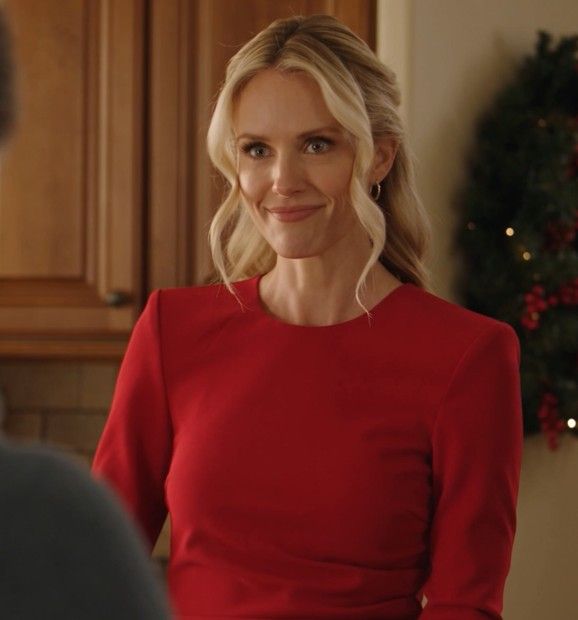
Tiffany’s red dress brushed the kitchen counter as she announced that twenty-five people would spend Christmas in my house.
She set down her coffee as if she had come to inspect a property, not visit the woman who owned it. “My whole family is coming this year,” she said. “Only twenty-five people.” She did not ask whether I wanted a house full of guests. She spoke as though the decision had already been made.
I looked past her at the oak cabinets and the back door where December light fell across the floor. My late husband and I had spent thirty-five years paying for every inch of that house. For five Christmases, though, I had spent the holiday behaving like hired help inside it.
I cooked for twelve hours, smiled when people praised the meal, and washed dishes while everyone else opened gifts. When Tiffany asked for another turkey or a fresh pot of coffee, I told myself I was keeping a family tradition alive. I had taught them that my exhaustion was part of the decorations.
So I folded the towel in my hands and smiled. “Perfect. I’ll be away this Christmas. You and your family can cook, decorate, entertain your guests, and clean everything afterward.”
Her smile stopped. “What do you mean, away?”
“I mean I’ve made plans.”
“But I’ve already invited everyone.”
“You should have asked before inviting twenty-five people into someone else’s home.”
Her expression hardened. “Our home,” she corrected. “Kevin is your son. This house will belong to us someday.”
The words landed without a disguise. She was not waiting for my permission. She was speaking as if my life were only a temporary obstacle between her and a house she had already claimed.
Kevin walked in from work, loosening his tie. Tiffany told him about the Christmas gathering. He glanced at me, then shrugged. “That makes sense.” He did not ask if I agreed or whether I had plans. He treated my home and my labor as decisions already settled.
I searched his face for the boy who used to insist on placing the angel atop our tree. Then I looked back at my daughter-in-law. “I won’t be here.”
Kevin frowned. “What plans?”
“The kind people make when nobody bothers to ask what they want.”
Tiffany crossed her arms and accused me of punishing them. “I’m simply declining to volunteer,” I said. The grandfather clock ticked in the hallway. A cardinal landed outside, and for a moment the kitchen felt calmer than it had in years.
Then my eyes moved to the sealed ivory envelope on the counter. I had spent the previous week meeting with my attorney. Neither Tiffany nor Kevin had noticed it, and neither knew what the papers inside said about the future of this house.
I rested one hand on the envelope. For the first time in years, I was not planning Christmas. I was preparing consequences. What I found inside that envelope would decide whether my family could still call this place home—or whether I had already waited too long to protect it.
The envelope gave a faint papery whisper beneath my hand, and Kevin finally noticed it.
“What is that?” he asked. His voice had lost its casual edge. Tiffany’s eyes traveled from my fingers to the ivory paper, then back to my face. I kept my hand where it was. “A set of documents I asked my attorney to prepare.”
“Documents about what?” Kevin stepped closer. The question came out sharper than he meant it to. I could hear the hallway clock marking the seconds between us. “About my house,” I said. “About the plans I have a right to make for it.”
Tiffany gave a short laugh, but it sounded brittle. “You’re making this into some legal drama because we want to celebrate Christmas with family.” She glanced at Kevin as though expecting him to help her restore the balance. He stared at the envelope instead.
“It’s not about Christmas,” I said. “Christmas is the moment I finally noticed how you both treat my choices. The house is the subject you keep speaking about as if I were already gone.”
Kevin opened his mouth, then closed it. Tiffany picked up her coffee cup and put it down again without drinking. I had watched that small movement from her many times: the pause before she turned a request into an expectation.
I slid the envelope across the counter, but I did not hand it to either of them. “You can read the cover letter if you want. The documents are not a threat. They are my estate plan, and I am entitled to decide what happens to my property.”
Kevin’s gaze lifted. “Are you changing the will?”
“I am making sure it says what I actually want. The house is mine. I have not promised it to you, and I have not promised it to Tiffany. I will decide whether to leave it to you, sell it, or use its value for my own care.”
Tiffany’s cheeks flushed. “Nobody said you couldn’t.”
“You said it would belong to you someday.”
“I meant eventually. Families talk that way.”
