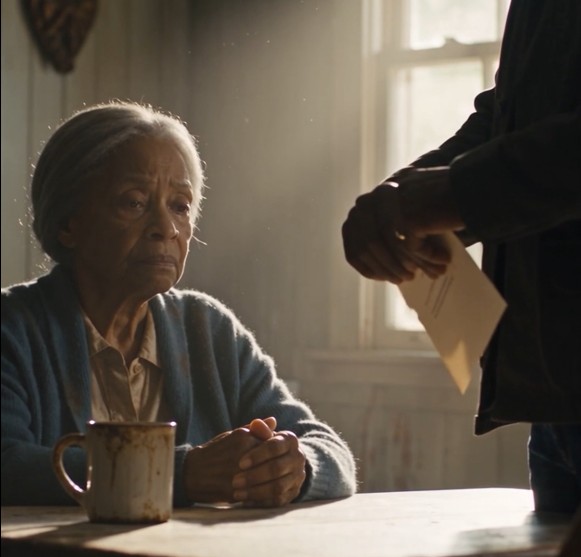
Her son tore the attorney’s letter in half before Evelyn could finish speaking.
“Now there’s nothing to discuss.”
The two pieces hung from his hands above her kitchen table. Evelyn looked at the torn edges, then at the man she had once been afraid she would outlive.
At eighty, she had learned how to keep her voice steady.
But for a moment, she couldn’t find it.
“Sign the house over, Mama,” he said. “You’re too old to need all this.”
All this.
The Vermont farmhouse. The kitchen where she had stretched groceries and waited for telephone calls. The rooms she still lived in, spoken about as though she had already left them.
Evelyn was a Black American widow who remembered sitting across from bankers who wouldn’t give her a loan. She remembered having to explain, again and again, why she could be trusted to pay for a home.
Now her own son stood across from her, asking her to explain why she should keep it.
“You have somewhere to live,” she said.
“That isn’t what I’m talking about.”
“No,” Evelyn answered quietly. “It isn’t.”
He glanced at the pieces of paper.
Whatever he had expected from the visit, it wasn’t this silence. Perhaps he had imagined an argument about her age, or the work the house required.
Those were things he could answer.
Instead, his mother was looking at him with an expression he couldn’t seem to read.
“You didn’t have to bring an attorney into it,” he said.
Evelyn’s jaw tightened.
The letter had been her attempt to spare them this conversation. Everything she needed him to understand was on that page, written plainly enough that she wouldn’t have to watch his face while he learned it.
He had torn it before reading to the end.
“There was something in there you needed to know.”
“About the house?”
“About what I owe.”
His eyes returned to hers.
For the first time since he had told her to sign, he seemed uncertain.
Evelyn remembered his hospital room. How carefully she had watched his breathing. How every ordinary conversation had felt like something precious they might not get to finish.
He remembered being told the bills were handled.
Neither of them had spoken much about money afterward.
Until now.
“The mortgage paid for your transplant,” she said.
His hands went still.
“That letter explains why there’s no inheritance yet.”
For several seconds, the only sound came from the refrigerator.
“You said insurance covered it.”
Evelyn looked at the torn paper in his hands. He was holding the explanation now, but he no longer seemed interested in reading it.
“You were sick,” she said. “I wanted you thinking about living.”
His lips parted.
She waited, giving him the same patience she had given him all his life.
Then she asked the question he hadn’t prepared himself to hear.
